


Lectura audio (roumanian language) “Intre iadul deznadejdii si iadul smereniei” https://rumble.com/playlists/OnRz-7-SSLY
Cartea Sfantului Siluan (roumanian language) https://drive.google.com/file/d/1uEEm1Oqq0gWM0F6neaPAh3Wc1XPai0RX/view?usp=drive_link
Viata si cartea Sf Siluan – alta traducere, 1gb download copie xerox slaba calitate https://drive.google.com/file/d/1oWewALXqKzZ6OiSNJid9n0t49DiZgS9X/view?usp=drive_link
Saint Silouan book in english purchase link (also on Amazon) https://essexmonastery.com/bookshop/saint-silouan-the-athonite
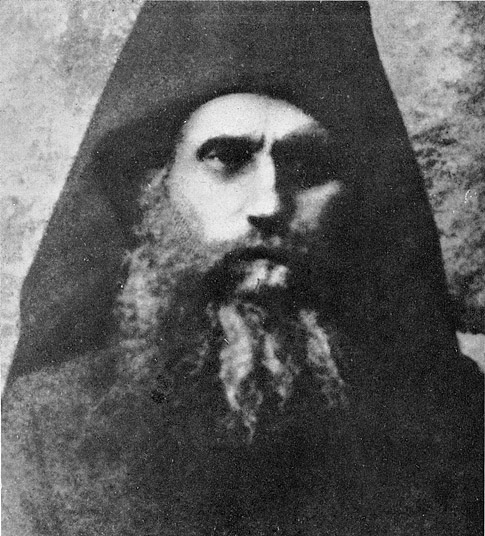
I put all the images with St Silouane in what appears to be a chronological order. The 8th picture, the one with Father Sophrony standing, his disciple, must have been taken after 1931 when the two meet for the first time. In the last picture, St Silouane appears to be of older age, perhaps few years before his death. The head of the saint is at the Panteleimon Monastery in Athos (last picture).
From the book St. Silouan, Wisdom From Mount Athos – The Writings of Staretz Silouan 1866-1938, Archimandrite Sofronii.
The person who doesn’t know The Lord, is afraid of death because he thinks He will not forgive his sins. But this happens because we don’t know how much He loves us. If we people would know how much He loves us, not a single person would lose hope, because The Lord no only forgives, but He also rejoices when the sinner is repenting. Even on your deathbed, believe without doubt that God will forgive you, and He will do.
Christ prayed for those who were crucifying Him: ‘Father, forgive them; for they know not what they do.’ St. Stephen prayed for those who stoned him, that the Lord ‘lay not this sin to their charge.’ And we, if we wish to preserve grace, must pray for our enemies. If you do not feel pity for the sinner destined to suffer the pains of fire, it means that the grace of the Holy Spirit is not in you, but an evil spirit lives in you. While you are still alive, strive by repentance to free yourself from this spirit.
The Lord taught me to love my enemies. Without the grace of God we cannot love our enemies, but the Holy Spirit teaches love, and then even devils rouse our pity because they have fallen from good, and lost humility and love of God.
I am begging you, put this to the test. When a man affronts you or brings dishonor on your head, or takes what is yours, or persecutes the Church, pray to the Lord, and say: ‘O Lord, we are all Your creatures. Have pity on Your servants, and turn their hearts to repentance,’ and you will be aware of grace in your soul. To begin with, constrain your heart to love her enemies, and the Lord, seeing your good will, will help you in all things, and experience itself will show you the way. But the man who thinks with malice of his enemies has not God’s love within him and does not know God.
If you pray for your enemies, peace will come to you; but when you come to love your enemies–know that a great measure of the grace of God dwells in you, though I do not say perfect grace as yet, but sufficient for salvation. Whereas if you revile your enemies it means there is an evil spirit living in you and bringing evil thoughts into your heart, for, in the words of the Lord, out of the heart proceed evil thoughts or good thoughts.
If you cannot love, then at least do not revile and curse your enemies, and things will already be better; but if a man curse and abuse his enemies it is plain that an evil spirit abides in him, and when he dies he will go to the abode of evil spirits. May the Lord preserve every soul from such adversity!
Understand me. It is so simple. People who do not know God, or who go against Him, are to be pitied: the heart sorrows for them and the eye weeps. Both paradise and torment are clearly visible to us: we know them through the Holy Spirit. And did not the Lord Himself say: ‘The Kingdom of God is within you’? Thus eternal life has its beginnings here in this life; and here it is that we sow the seeds of eternal torment.
Where there is pride there cannot be grace, and if we lose grace we also lose both love of God and assurance in prayer. The soul is then tormented by evil thoughts and does not understand that he must humble himself and love his enemies, for there is no other way to please God…
He who loves the Lord is always mindful of Him, and remembrance of God begets prayer. If you are forgetful of the Lord you will not pray, and without prayer the soul will not dwell in the love of God, for the grace of the Holy Spirit comes through prayer. Prayer preserves a man from sin, for the prayerful mind is intent on God and in humbleness of spirit stands before the face of the Lord, Who knows the soul of the one who is praying.
But the novice naturally needs a guide, because until the advent of the grace of the Holy Spirit the soul is involved in fierce struggle with his foes and is unable to disentangle himself if the enemy offer him his delights. Only the man with experience of the grace of the Holy Spirit can understand this. He who has tasted of the Holy Spirit recognizes the taste of grace.
The man who sets out without guidance to engage in prayer (imagining in his arrogance that he can learn to pray from books), and will not go to a spiritual director is already half deceived. But the Lord helps the man who is humble, and if there be no experienced guide, and he turns to the confessor he finds, the Lord will watch over him for his humility.
Whoever would pray without ceasing must have fortitude and be wise, and he should consult his confessor in all things. And if your father-confessor has not himself trodden the path of prayer nevertheless seek counsel of him, and because of your humility the Lord will have mercy on you and keep you from all untruth.
But if you think to yourself, ‘My confessor lacks experience and is occupied with vain things: I will be my own guide with the help of books,’ then your foot is set on a perilous path and you are not far from being beguiled and going astray. I know many such who reasoned thus and so deceived themselves, and who did not thrive because they despised their confessors. They forget that the saving grace of the Holy Spirit is at work in the Sacrament of confession. In such ways does the enemy delude those who fight the good fight – the enemy would have no men of prayer – but the Holy Spirit gives good counsel to the soul when we listen to the advice of our pastors.
Think in this way: the Holy Spirit dwells in your confessor and he will tell you what is right. But if you say to yourself that your confessor lives a negligent life, and how can the Holy Spirit dwell in him, you will suffer mightily from such thoughts, and the Lord will bring you low and you are sure to fall into temptation.
Prayer comes with praying, as it is said in the Scriptures; but prayer which is only a habit, prayer without contrition for our sins, is not pleasing to the Lord. My soul yearns after the Lord, and I seek Him ardently, and my soul suffers thought of no other matter.
My soul yearns after the living Lord, and my spirit strains towards Him, my heavenly Father, my kin. The Lord made us His kin by the Holy Spirit. The Lord is dear to the heart-He is our joy and gladness, and our firm hope. O Gracious Lord, mercifully seek out Your creation and show Yourself to all men in the Holy Spirit, as You show Yourself to Your servants. Rejoice, 0 Lord, every afflicted soul by the coming of Your Holy Spirit, and let all who pray to You know the Holy Spirit.
O all you people, let us humble ourselves for the sake of the Lord and the Kingdom of Heaven. Let us humble ourselves and the Lord will give us to know the power of the Jesus Prayer. Let us humble ourselves and the Spirit of God Himself will instruct the soul.
O man, learn the humility of Christ and the Lord will give you to taste of the sweetness of prayer. And if you would pray cleanly, be humble and temperate confess yourself thoroughly, and prayer will feel at home in you. Be obedient, submit with a good conscience to those in authority; be content with all things, and your mind will be cleansed of vain thoughts.
Remember that the Lord sees you, and be fearful to offend your brother, don’t dispraise nor grieve him even by a look, and the Holy Spirit will love you and will Himself be your help in all things.
If you would retain prayer you must love those who offend against you and pray for them until your soul is reconciled with them, and then the Lord will give you prayer without ceasing, for He gives the prayer to those who pray for their enemies.
For prayer our teacher is the Lord Himself, but we must seek to humble our souls. He who prays aright has the peace of God in his soul. The man of prayer should feel tenderly towards every living thing. The man of prayer loves all men and has compassion for all, for the grace of the Holy Spirit has taught him love.
The Holy Spirit is like a dear mother. A mother loves her child and has pity on it; and the Holy Spirit has pity on us, forgives and heals us, enlightens and rejoices us. And the Holy Spirit becomes known in humble prayer.
The Father so loved us that He gave us His Son; but such was the will of the Son too, and He became incarnate and lived with us on earth. And the holy Apostles and a multitude of people beheld the Lord in the flesh, but not all knew Him as the Lord; yet it has been given to me, a poor sinner, through the Holy Spirit to know that Jesus Christ is God.
The Lord loves man and reveals Himself to man. And when the soul beholds the Lord she humbly rejoices in the Master’s compassion, and from that hour her love for her Creator is greater than her any other love: though she may see all things and love all men, yet will she love the Lord above all.
The soul suddenly sees the Lord and knows that it is He.
Who shall describe this joy, this gladness?
The Lord is made known in the Holy Spirit, and the Holy Spirit pervades the entire man – soul, mind and body.
This is how God is known in heaven and on earth.
The Lord in His boundless mercy granted this grace to me, a sinner, that others might come to know God and turn to Him.
I write out of the grace of God.
Yes, this is truth.
The Lord Himself is my Witness.
The Merciful Lord gave the Holy Spirit on earth, and by the Holy Spirit was the Holy Church established.
The Holy Spirit unfolded to us not only the things of the earth but those too which are of heaven.
The Prophets, the beloved of the Lord, rejoiced in the Holy Spirit, wherefore the words that they spake were mighty and pleasant, for every soul would hear the word of the Lord.
Filled with love the holy Apostles went into all the world, preaching salvation to mankind and fearing nothing, for the Spirit of God was their strength. When St Andrew was threatened with death upon the cross if he did not stay his preaching he answered: ‘If I feared the cross I would not be preaching the Cross.’
In this manner all the other Apostles, and after them the martyrs and holy men who wrestled against evil, went forward with joy to meet pain and suffering. For the Holy Spirit, sweet and gracious, draws the soul to love the Lord, and in the sweetness of the Holy Spirit the soul loses his fear of suffering.
The Lord is love; and He commanded us to love one another and to love our enemies; and the Holy Spirit teaches us this love.
The soul that has not come to know the Holy Spirit does not understand how it is possible to love one’s enemies, and will not receive this commandment; but the Lord is pity for all men, and he who would be with the Lord must love his enemies.
How may we know whether the Lord loves us or not?
Here are tokens: If you battle firmly against sin the Lord loves you. If you love your enemies you are even more beloved of God. And if you lay down your life for others you are greatly beloved of the Lord, who Himself laid down His life for us.
The man who has known the Lord through the Holy Spirit becomes like unto the Lord, as St John the Divine said: ‘We shall be like him; for we shall see him as he is.’ And we shall behold his glory.
Many numbers of people, you say, are suffering every kind of adversity and from evil men. But I’m asking you: Humble yourself beneath the strong hand of God, and grace will be your teacher and you yourself will long to suffer for the sake of the love of the Lord. That is what the Holy Spirit, whom we have come to know in the Church, will teach you.
But the man who cries out against evil men, who does not pray for them will never know the grace of God.
If you would know of the Lord’s love for us, you would hate sin and wrong thoughts, and day and night pray fervently. The Lord will then give you His grace, and you will know Him through the Holy Spirit, and after death, when you enter into paradise, there too you will know the Lord through the Holy Spirit, as you knew Him on earth.
We do not need riches or learning in order to know the Lord: we must simply be obedient and sober, have a humble spirit and love our fellow-men. The Lord will love a soul that does this, and of His own accord make Himself manifest to her and instruct her In love and humility, and give her all things necessary for her to find rest in God.
We may study as much as we will but we shall still not come to know the Lord unless we live according to His commandments, for the Lord is not made known through learning but by the Holy Spirit. Many philosophers and scholars have arrived at a belief in the existence of God, but they have not come to know God.
To believe in a God is one thing, to know God is another one.
Both in heaven and on earth the Lord is made known only by the Holy Spirit, and not through ordinary learning. Even children, who have no learning at all, come to know the Lord by the Holy Spirit. St John the Baptist felt the presence of the Lord while still In his mother’s womb. St Simeon the Stylite was a seven-year-old boy when the Lord appeared to him and he knew Him; St Seraphim a grown man of twenty-seven when the Lord showed Himself to him during the Liturgy; and another Simeon was stricken with years when he received the Lord in his arms in the temple, and knew Him.
Some spend their whole lives in trying to find out about the sun, or the moon, or in seeking alike knowledge; yet this is of no profit to the soul. But if we take pains to explore the human heart this is what we shall see: the kingdom of heaven in the soul of the saint, but in the soul of the sinner are darkness and torment. And it is good to know this because we shall dwell eternally either in the kingdom or in torment.
Just as the love of Jesus Christ is beyond our understanding so we cannot conceive of the depth of His suffering, because our own love for the Lord is so infinitely small. But with greater love comes more understanding even of the Lord’s sufferings. There is love in small degree, medium love and perfect love; and the more perfect our love the more perfect our knowledge.
We are able to treat of God only in so far as we have known the grace of the Holy Spirit; for how can a man think on and consider a thing that he has not seen or heard tell of, and does not know? Now the Saints declare that they have seen God; yet there are people who say that God is not. No doubt they say this as they have not known God, but this does not at all mean that He is not.
The Saints speak of that which they have actually seen, of that which they know. They do not speak of something they have not seen. (They do not tell us, for instance, that they have seen a horse a mile long or a steamer ten miles long, which do not exist.) And I think that, if God was not, there would be no intimation of Him on earth. But people want to live after their own fashion and consequently they declare that God is not, and in so doing they establish that He is.
Even the souls of the pagans sensed that God exists, though they were ignorant how to worship the true God. But the Holy Spirit instructed the Prophets of old and after them the Apostles and then our holy Fathers and bishops, and in this wise the true faith came down to us. And we knew the Lord by the Holy Spirit, and when we knew Him our souls were confirmed in Him.
The Lord loves us so dearly that it passes description. Through the Holy Spirit alone can the soul know His love, of which she is inexpressibly aware. The Lord is all goodness and mercy. He is meek and gentle, and we have no words to tell of His goodness; but the soul without words feels this love and would remain wrapped in its quiet tranquility for ever.
Christ said: ‘I will not leave you comfortless’, and we see, in truth, that He did not forsake us but gave us the Holy Spirit.
O you peoples of the earth, know your Creator and His love for us! Know the love of Christ, and live in peace and thereby rejoice the Lord, who in His mercy waits for all men to come to Him.
Turn to Him, all you peoples of the earth, and lift your prayers to God. And the prayers of the whole earth shall rise to heaven like a soft and lovely cloud lit by the sun, and all the heavens will rejoice and sing praises to the lord for His sufferings with which He saved us.
Know, all you people, that we are created for the glory of God in the heavens. Look not to the earth, for God is our Father and He loves us like beloved children.
O Lord grant to all nations to know You by Thy Holy Spirit. As You did give the Holy Spirit to the Apostles and they knew You, so grant to all men to know You by Your Holy Spirit.
It is a great good to give oneself up to the will of God. Then the Lord alone is in the soul. No other thought can enter in, and the soul feels God’s love, even though the body be suffering.
When the soul is entirely given over to the will of God, the Lord Himself takes him in hand and the soul learns directly from God. Whereas, before, he turned to teachers and to the Scriptures for instruction. But it rarely happens that the soul’s teacher is the Lord Himself through the grace of the Holy Spirit, and few there are that know of this, save only those who live according to God’s will.
The proud man does not want to live according to God’s will: he likes to be his own master and does not see that man has not wisdom enough to guide himself without God. And I, when I lived in the world, knew not the Lord and His Holy Spirit, nor how the Lord loves us—I relied on my own understanding; but when by the Holy Spirit I came to know our Lord Jesus Christ, Son of God, my soul submitted to God, and now I accept every affliction that befalls me, and say: “The Lord looks down on me. What is there to fear?” But before, I could not live in this manner.
Life is much easier for the man who is given over to the will of God, since in illness, in poverty, in persecution he reflects thus: “Such is God’s pleasure, and I must endure on account of my sins.”
Thus for many years have I suffered violent headaches, which are hard to bear but salutary because the soul is humbled through sickness. My soul longs to pray and keep vigil, but sickness hinders me because of my body’s demand for rest and quiet; and I besought the Lord to heal me, and the Lord hearkened not unto me. So, therefore, it would not have been salutary for me to have been cured.
Here is another case which happened to me, wherein the Lord made haste to hearken unto me and save me. We were given fish one feast-day in the refectory, and, while I was eating, a fish-bone found its way deep down my throat and stuck in my chest. I called to the holy martyr St. Panteleimon, begging him to help me, as the doctor could not extract the bone. And when I spoke the word ‘heal,’ my soul received this answer: ‘Leave the refectory, take a deep breath, fill out your cheeks with air, and then cough; and you will bring the bone up together with some blood.’ This I did. I went out, exhaled, coughed, and a big bone came up with some blood. And I understood that if the Lord does not cure me of my headaches it is because they are good for my soul.
The most precious thing in the world is to know God and understand His will, even if only in part.
The soul that has come to know God should in all things submit to His will, and live before Him in awe and love: in love, because the Lord is love; in awe, because we must go in fear of grieving God by some evil thought.
O Lord, by the power of the grace of the Holy Spirit, teach us so we may live according to Your holy will.
When grace is with us we are strong in spirit; but when we lose grace we see our infirmity—we see that without God we cannot even think a good thing.
O God of Mercy, You know our infirmity. I am begging You, grant me a humble spirit, for in Your mercy You enable the humble soul to live according to Your will. You will reveal Your mysteries to him. You give him to know You and the infinity of Your love for us.
How are you to know if you are living according to the will of God?
Here is a sign: if you are distressed over anything it means that you have not fully surrendered to God’s will, although it may seem to you that you live according to His will.
He who lives according to God’s will have no worries. If he has need of something, he offers himself and the thing he wants to God, and if he does not receive it, he remains as tranquil as if he had got what he wanted.
The soul that is given over to the will of God fears nothing, neither thunder nor thieves nor any other thing. Whatever may come, ‘Such is God’s pleasure,’ he says. If he falls sick he thinks, ‘This means that I need sickness, or God would not have sent it.’
And in this wise is peace preserved in soul and body.
The man who takes thought for his own welfare is unable to give himself up to God’s will, that his soul may have peace in God. But the humble soul is devoted to God’s will, and lives before Him in awe and love; in awe, he doesn’t grieve God in any way; in love, because the soul has come to know how the Lord loves us.
The best thing of all is to surrender to God’s will and bear affliction having confidence in God. The Lord, seeing our affliction, will never give us too much to bear. If we seem to ourselves to be greatly afflicted, it means that we have not surrendered to the will of God.
The soul that is in all things devoted to the will of God rests quiet in Him, for he knows of experience and from the Holy Scriptures that the Lord loves us much and watches over our souls, quickening all things by His grace in peace and love.
Nothing troubles the man who is given over to the will of God, be it illness, poverty or persecution. He knows that the Lord in His mercy is solicitous for us. The Holy Spirit, whom the soul knows, is witness therefore. But the proud and the self-willed do not want to surrender to God’s will because they like their own way, and that is harmful for the soul.
Abba Pimen said: ‘Our own will is like a wall of brass between us and God, preventing us from coming near to Him or contemplating His mercy.’
We must always pray the Lord for peace of soul that we may the more easily fulfill the Lord’s commandments; for the Lord loves those who strive to do His will, and thus they attain profound peace in God.
He who does the Lord’s will is content with all things, though he be poor or sick and suffering, because the grace of God gladdens his heart. But the man who is discontent with his lot and murmurs against his fate, or against those who cause him offense, should realize that his spirit is in a state of pride, which has taken from him his sense of gratitude towards God.
But if it be so with you, do not lose heart but try to trust firmly in the Lord and ask Him for a humble spirit; and, when the lowly spirit of God comes to you, you will then love Him and be at rest in spite of all tribulations.
The soul that has acquired humility is always mindful of God, and thinks to himself: ‘God has created me. He suffered for me. He forgives me my sins and comforts me. He feeds me and cares for me. Why then should I take thought for myself, and what is there to fear, even if death threatens me?’
The Lord enlightens every soul that has surrendered to the will of God, for He said: Call upon me in the day of trouble: I will deliver thee, and you shall glorify Me.
A soul that is troubled about anything should inquire of the Lord and the Lord will give understanding, but this primarily in times of calamity and bewilderment. As a general rule we should be advised by our spiritual father, for this is a humbler way.
It is good to learn to live according to the will of God. The soul then dwells unceasingly in God, and is serene and tranquil; and from the fullness of joy man prays that every soul may know the Lord, know His great love for us and how richly He gives us of the Holy Spirit, who rejoices the soul in God.
And all things are then dear to the soul, for all things are of God.
The Lord in His mercy gives man to understand that he must suffer affliction with a grateful heart. My whole life long I never once rebelled against affliction but accepted all things as physic from the hand of God, and I ever offered up thanks to God, wherefore the Lord enabled me to bear all affliction lightly.
No one on this earth can avoid affliction; and although the afflictions which the Lord sends are not great, men imagine them beyond their strength and are crushed by them. This is because they will not humble their souls and commit themselves to the will of God. But the Lord Himself guides with His grace those who are given over to God’s will, and they bear all things with fortitude for the sake of God Whom they have so loved and with Whom they are glorified for ever.
It is impossible to escape tribulation in this world but the man who is given over to the will of God bears tribulation easily, seeing it but putting his trust in the Lord, and so his tribulations pass.
When the Mother of God stood at the foot of the Cross, the depth of her grief was inconceivable, for she loved her Son more than any one can realize. And we know that the greater the love the greater the suffering. By the laws of human nature, the Mother of God could not possibly have endured her affliction; but she had submitted herself to the will of God, and the Holy Spirit sustained her and gave her the strength to bear this affliction.
And later, after the Ascension of the Lord, she became a great comfort to all God’s people in their distress.
The Lord gave us the Holy Spirit, and the man in whom the Holy Spirit lives feels that he has paradise within him.
Perhaps you will say, ‘Why is it I have not grace like that?’ It is because you have not surrendered yourself to the will of God but live in your own way.
Look at the man who likes to have his own way. His soul is never at peace and he is always discontented: this is not right and that is not as it should be. But the man who is entirely given over to the will of God can pray with a pure mind, his soul loves the Lord, and he finds everything pleasant and agreeable.
Thus did the Most Holy Virgin submit herself to God: ‘Behold, the handmaid of the Lord; be it to me according to Your word.’ And were we to say likewise—’Behold the servant of the Lord; be it unto me according to Your word’ – then the Lord’s words written in the Gospels by the Holy Spirit would live in our souls, and the whole world would be filled with the love of God, and how beautiful would life be on earth! And although the words of God have been heard the length and breadth of the universe for so many centuries, people do not understand and will not accept them. But the man who lives according to the will of God will be glorified in heaven and on earth.
The man who is given over to the will of God is occupied only with God. The grace of God helps him to continue in prayer. Though he may be working or talking, his soul is absorbed in God because he has given himself over to God’s will, wherefore the Lord has him in His care.
There is a legend that a robber met the Holy Family when they were journeying into Egypt, but did them no harm; and when he saw the Child he said that were God to become flesh He would not be more beautiful than this Child. And he left them to go in peace.
What an astonishing thing that a robber, who like a savage beast spares no one, should neither annoy nor hurt the Holy Family! At the sight of the Child and His humble Mother the robber’s heart softened and was touched by the grace of God.
Thus it was with the wild beasts who grew gentle when they saw martyrs and holy men, and did them no harm. And even devils fear the meek and humble soul who vanquishes them by obedience, soberness and prayer.
Another thing to marvel at: the robber had pity on the Infant Lord, but the high priests and elders delivered Him to Pilate to be crucified. And this was because they did not pray and seek enlightenment of the Lord as to what they should do, and how.
So it often happens that leaders and their people desire good but are ignorant where it is to be found. They do not know that it is in God, and comes from God.
We must always pray to the Lord to tell us what to do, and the Lord will not let us go astray.
Adam was not wise enough to ask the Lord about the fruit which Eve gave him, and so he lost paradise.
David did not ask the Lord whether it would be a good thing if he took Bathsheba to wife, and so he fell into the sins of murder and adultery.
So with all the saints who sinned: they sinned because they had not called upon God to enlighten and help them. St Seraphim of Sarov said, ‘When I spoke from myself I was often in error.’
But there are also sinless mistakes of imperfection: we can observe such even in the Mother of God. St Luke tells us that when she and Joseph were returning from Jerusalem she did not know where her Son was, supposing Him to be journeying with their kinsfolk and acquaintances, and it was only after they had searched three days that they found Him in the Temple at Jerusalem, conversing with the elders.
Thus the Lord alone is omniscient, and each one of us, whoever he may be, must pray to God for understanding, and consult his spiritual father, that we may avoid mistakes.
The Holy Spirit sets us all on different paths: one man lives a life of silent solitude in the desert; another prays for mankind; still another is called to minister to Christ’s flock; to a fourth it is given to comfort or preach to the suffering; while yet another serves his neighbor by his goods or by the fruits of his labor and all these are gifts of the Holy Spirit given in varying degrees: to one man thirty fold, to another sixty and to some an hundred.
If we loved one another in simplicity of heart the Lord through the Holy Spirit would show us many miracles and reveal great mysteries.
God love is insatiable…
My mind is arrested in God, and I leave writing…
How clear it is to me that the Lord steers us. Without Him we cannot even think a good thing. Therefore we must humbly surrender ourselves to the will of God, that the Lord may guide us.
We all suffer here on earth and seek freedom, but few there are who know the meaning of freedom and where it is to be found.
I too want freedom and seek it day and night. I learnt that freedom is with God and is given of God to humble hearts who have repented and sacrificed their wills before Him. To those who repent the Lord gives His peace and freedom to love Him. There is nothing better in the world than to love God and one’s fellow man. In this does the soul find rest and joy.
O all peoples of the earth, I fall on my knees to you, I am begging you with tears to come to Christ. I know His love for you. I know and therefore I cry to the whole world. If one does not know a thing, how could one speak of it?
‘But how may I know God?’ you will ask. And I say that we have seen the Lord by the Holy Spirit. If you humble yourself, the Holy Spirit will show our Lord to you too; and you too will want to proclaim Him to all the world.
I am an old man awaiting death. I write the truth for love of God’s people over whom my soul grieves. If I should help but a single soul to salvation, I will give thanks to God; but my heart aches for the whole world, and I pray and shed tears for the whole world, that all may repent and know God and live in love, and delight in freedom in God.
O all peoples of the earth, pray and weep for your sins, that the Lord may forgive them. Where there is forgiveness of sins there is freedom of conscience and love, even if just a little.
The Lord does not desire the death of a sinner, and on him who repents He bestows the grace of the Holy Spirit, which gives peace to the soul and freedom for the mind and heart to dwell in God. When the Holy Spirit forgives us our sins we receive freedom to pray to God with an un-distracted mind, and we can freely think on God and live serene and joyous in Him. And this is true freedom. But without God there can be no freedom, for the enemy agitates the soul with evil thoughts.
O people from all over the world, repent while there is still time. God mercifully awaits our repentance. And all heavens and all the Saints look for our repentance. As God is love, so the Holy Spirit in the Saints is love. Ask, and the Lord will forgive. And when you receive forgiveness of sins there will be joy and gladness in your souls, and the grace of the Holy Spirit will enter into your souls, and you will cry: ‘This is true freedom. True freedom is in God and of God.’
The grace of God does not take away freedom, but merely helps man to fulfill God’s commandments. Adam knew grace but he could still exercise his will. Thus too the angels abide in the Holy Spirit and yet are not deprived of free will.
Many people are ignorant of the way of salvation: they walk in darkness and do not see the Light of Truth. But He was, is and will be, and in His mercy calls all men to Himself. ‘Come to me all who are weary and heavy laden. Know me, and I will give you rest and freedom.’
This is true freedom : to be in God. And I did not know this before. Until I was seven and twenty I simply believed that God was, but I did not know Him; but when my soul knew Him by the Holy Spirit I was consumed with longing for Him, and now day and night I seek Him with burning heart.
The Lord wants us to love one another: in this – in love towards God and our fellow-man-lies freedom. In this lie both freedom and equality. With society as it is graduated on this earth, there can be no equality; but that is of no importance to the soul. Not everyone can be an emperor or a prince; not everyone can be a patriarch or an abbot, or a leader; but in every walk of life we can love God and be pleasing to Him, and only this is important. And the man who loves God most in this world will have the most glory in the Kingdom. He who loves most will the most strongly yearn and reach for God, and be closest to Him. Each will be glorified according to the measure of his life. And I have discovered that love varies in strength.
When a man fears God lest he grieve Him in some way – that is the first degree of love. He who keeps his mind pure of intrusive thoughts knows the second degree of love, which is greater than the first. The third and still greater kind of love is when a man is sensible of grace in his soul.
The fourth and perfect kind of love for God exists when a man possesses the grace of the Holy Spirit both in soul and body. The body is then hallowed, and after death the earthly remains become relics. This is what happened in the case of the holy Martyrs and Prophets and venerable Fathers. The man who loves in this wise is proof against carnal love. He may lie beside a woman without feeling the smallest desire for her. Love of God is stronger than love of woman – to which all the world is attracted save those who are filled with the grace of God, for the sweetness of the Holy Spirit regenerates the entire man and teaches him to love God to the utmost. In the foulness of her love for God, the soul has no contact with the world; though a man live on earth among other men, in his love for God he forgets everything that is of this world. But our trouble is that through the pride of our mind we do not continue in this grace, and so grace forsakes us, and the soul seeks it, weeping and sobbing and saying:
“My soul longs for the Lord.”
My soul thirsts for the living God. Time and again my soul seeks foulness of delight in the Lord. O mercy of God that passes all understanding: the Lord formed man of the dust of the ground, and breathed into his nostrils the breath of life, and the soul of man was made kin to God.
The Lord so loved His creature that He gave man the Holy Spirit, and man knew his Creator and loved his Lord.
The Holy Spirit is love and sweetness to the soul, the mind and the body; but when the soul loses grace, or grace is diminished, once again the soul will seek the Holy Spirit in tears, and yearn for God and cry:
My soul yearns for the Lord, and I seek Him in tears.
How could I not seek You, O Lord? For You Yourself did seek me out beforehand, and gave me to delight in Your Holy Spirit; and now my soul is searching for You. My heart fell to loving You, and I pray You: give me to the end to abide in Your love. For the sake of Your love empower me to endure all sickness and affliction.
My soul is seized with fear and trembling when I would write of the love of God.
My soul is poor and without strength to describe the Lord’s love.
My spirit fails, but love constrains me to write.
The Lord ascended into heaven and awaits our coming; but to be with the Lord we must be like Him, or like little children – lowly and meek – and we must serve Him. Then, according to the words of the Lord, ‘Where I am, there shall also my servant be’, we too shall be with Him in the kingdom of heaven. But now my soul is overspread with melancholy, and I am unable to lift an un-distracted mind to God, and I have no tears wherewith to bewail my evil deeds: my soul is withered away and spent with the night of this life.
O who shall sing me the song that I have loved since the days of my youth – the song of the Lord’s Ascension into heaven, of His love for us, of the vigil He keeps for our coming? To this song would I hearken with tears, for my soul is weary on earth.
What has happened to me? How came I to lose joy, and shall I attain to joy again?
Weep with me, all ye wild beasts and birds. Weep with me, forest and desert. Weep with me, every creature created of God, and comfort me in my grief and sorrow.
O man, what a feeble creature you are.
When grace dwells within us the spirit glows and reaches day and night towards the Lord, for grace constrains the soul to love God; and now that she has come to love Him she cannot tear herself away from Him: never can she have enough of the tenderness of the Holy Spirit.
And there is no end to the love of God.
I know a man whom the Lord in His mercy visited with His grace. And had the Lord asked him, ‘Would you have Me give you more?’, from the weakness of the flesh his soul would have made answer: ‘You see, Lord, that I cannot bear more but would die.’ For man has little strength and may not carry the foulness of grace.
Thus it was that on Mount Tabor the Disciples fell on their face before the glory of the Lord.
With what shall I thank my Lord?
At all times I am begging the Lord who is merciful to grant that I may love my enemies; and by the grace of God I have experienced what the love of God is, and what it is to love my neighbor; and day and night I pray the Lord for love, and the Lord gives me tears to weep for the whole world. But if I find fault with any man or look on him with an unkind eye my tears dry up and my soul sinks into despondency. Yet do I begin again to entreat forgiveness of the Lord, and the Lord in His mercy forgives me, a sinner.
Brothers, before the face of my God I write: Humble your hearts, and while yet on this earth look upon the mercy of the Lord.
No man of himself can know what is God’s love, unless he will be taught of the Holy Spirit; but God’s love is known in our Church through the Holy Spirit, and so we speak of this love.
The sinful soul which does not know the Lord fears death, thinking that the Lord will not forgive her hir sins. But this is because the soul does not know the Lord and how greatly lie loves us. But if people knew this, then no man would despair in his heart, for the Lord not only forgives but rejoices exceedingly at the return of a sinner. Though you he at death’s door believe firmly that the moment you ask you will receive forgiveness.
The Lord is not like us. He is passing meek, and merciful, and good; and when the soul knows Him, he marvels greatly and exclaims: ‘0 what a Lord is ours!’
The Holy Spirit gave our Church to know how great is God’s mercy.
The Lord loves us, and gently and without reproach takes us to Himself, just as the father in the Gospel story did not reproach his prodigal son but called his servants to bring a new robe and put a precious ring on his finger and shoes on his feet, and told them to kill the fat calf, and be merry; and in nothing did he condemn his son.
‘Did not our heart burn within us’ said the Apostles after Christ drew near them. So does the soul recognize and love her Lord, and the delight of His love is a burning delight.
In heaven there is one and the same love in the hearts of all, but on earth some there are that greatly love the Lord, others love Him in small degree, while still others love Him not at all.
The soul that is filled with love of God is forgetful both of heaven and earth. The spirit burns and invisibly beholds the Desired One, and the soul sheds many sweet tears and is unable to forget the Lord for a single second, for the grace of God gives strength to love the Beloved.
Brothers, let us humble ourselves that we may be worthy of the love of God, that the Lord may adorn us with His lowliness of spirit and His humility, that we may become worthy of the heavenly mansions which the Lord has made ready for us.
The Lord loves all men but His love is greater for the man who seeks Him.
‘I love them that love me,’ said the Lord. ‘And those that seek me shall find grace.’ And with grace life is good, and the soul rejoices and says: ‘My Lord— I am YOUR servant.’
In these words there is great joy: if the Lord is ours. then all things are ours. That is how rich we are.
Great and inapprehensible is our Lord, but for our sake He made Himself small that we might know Him and love Him, that for love of Him we might forget the earth, and live in heaven and behold the glory of the Lord.
The Lord bestows such grace on His chosen that they embrace the whole earth, the whole world, with their love, and their souls burn with longing that all men should be saved and behold the glory of the Lord.
The Lord said to His holy Disciples: ‘Children, have you any meat?’ What great love is expressed in those tender words! The Lord calls us ‘Children’! What could rejoice us more? We should ponder these words and think on the Lord’s sufferings for us on the Cross.
On earth the soul has only to touch upon the love of God for the sweetness of the Holy Spirit to transport her with wonder at her beloved God and Heavenly Father.
O how the Lord loves His creation!
And behold the Lord has gave us to speak together of these things, and our spirit rejoices that the Lord is with us.
Humbly I entreat you—pray for me, and the Lord will reward you. Brother R. told me how once when he lay seriously ill his mother said to his father: ‘How ill our little child is! I would gladly let myself be cut in pieces if it would help him and ease his suffering.’
The Lord’s love for man is like that. He said: ‘Greater love has no man than this, that a man lay down his life for his fellow.’ The Lord’s compassion for us was so strong that He wanted to suffer for us, as a mother suffers, and even more. But no man can conceive of this great love without the grace of the Holy Spirit. The Scriptures tell of this love but neither are they to be understood by the mind, for in the Scriptures too speaks the same Holy Spirit.
The love of the Lord is such that He would have all men saved: His desire is that all should abide eternally with Him in heaven, and behold His glory. We do not know the fullness of this glory, but through the Holy Spirit we may conceive of it in part. But the man who has not come to know the Holy Spirit can have no conception of this glory: he can only believe in the promise of the Lord, and keep His commandments. However, he too is blessed. as the Lord showed St Thomas, and will have equal place with those who saw the glory of God while still here on earth.
If you want to know the Lord, humble yourself to the utmost. Be obedient and sober in all things. Love truth. And the Lord of a surety will give you to know Him through the Holy Spirit: and then you will know by experience what love towards God is, and what love towards man. And the more perfect the love, the more perfect your knowledge. There is love in small measure: there is a mean of love; and there is great love.
The man who fears sin loves God. The man with a tender heart loves Him more. Still greater is the love of the man in whose soul dwell light and joy. But the man with grace in soul and body has perfect love. This is the grace the Holy Spirit gave to the Martyrs, the grace that helped them to bear every suffering with fortitude.
I would speak for a moment (insomuch as the grace of God will enlighten me) of the various degrees of love for God.
Where a man fears to distress God by sinning in any way-that is the first degree of love. The man whose mind is un-distracted has love in the second degree, which is greater than the first. A third and still greater degree of love is when a man is aware of grace in his soul. And, finally, the man who has the grace of the Holy Spirit both in soul and body is in a state of perfect love; and if he preserve this grace the bones of his body will turn into sacred relics, as did the ones of the holy Martyrs, the Prophets, the blessed Fathers, and other great Saints.
We are proud-minded, and therefore unable to continue in this grace, which withdraws from the soul. Then the soul yearns after the grace he has lost, and seeks it with tears, and weeps and sobs and calls upon the Lord, saying: ‘0 merciful Lord, You see my soul’s mourning, and how I long for You.’
There is no man on earth so gentle and lowly in spirit as our Lord Jesus Christ. In Him is our joy, in Him our gladness. Let us give Him our love, and lie will lead us into His kingdom, where we shall behold Its glory.
These forty years, ever since the Lord through the Holy Spirit gave me to know the love of God, have I grieved over God’s people.
O brothers, there is nothing better than the love of God when the Lord fires the soul with love for God and our fellow-man.
The man who knows the delight of the love of God—when the soul, warmed by grace, loves both God and his brother – knows in part that ‘the kingdom of God is within us’.
Blessed is the soul that loves her brother, for our brother is our life.
Blessed is the soul that loves her brother. The Spirit of the Lord lives manifest within him, giving peace and gladness, and he weeps for the whole world.
My soul has remembered the Lord’s love, and my heart is grown warm. My soul is given over to bitter weeping that I have so deeply grieved the Lord, my beloved Creator, but He remembered not my sins; and then my soul surrendered to profound and sorrowful weeping that the Lord might have mercy on every soul and take each one into His heavenly kingdom.
And my soul weeps for the whole world.
I cannot remain silent concerning the people, whom I love so greatly that I must weep for them. I cannot remain silent because My soul ever grieves for the people of God, and I pray for them with tears. I cannot refrain from making known to you, brothers, the mercy of God and the wiles of the enemy.
Forty years have gone by since the grace of the Holy Spirit taught me to love mankind and every created thing, and revealed unto me the wiles of the enemy, who works his evil in the world by means of deceit.
Love does not depend on time, and the power of love continues always. There are some who believe that the Lord suffered death for love of man but because they do not attain to this love in their own souls it seems to them that it is an old story of bygone days. But when the soul knows the love of God by the Holy Spirit she feels without a shadow of doubt that the Lord is our Father, the closest. the best and dearest of fathers, and there is no greater happiness than to love God with all our hearts, with all our souls and with all our minds, according to the Lord’s commandment, and our neighbor as ourselves. And when this love is in the soul, everything rejoices her; but when it is lost sight of man cannot find peace, and is troubled, and blames others as if they had done him an injury, and does not realize that he himself is at fault—he has lost his love for God and has accused or conceived a hatred for his brother.
Grace proceeds from brotherly love, and by brotherly love is grace preserved; but if we do not love our brother the grace of God will not come into our souls.
If people kept Christ’s commandments there would be paradise on earth, and with little labor every man would suffice his needs, and the Spirit of God would live in the souls of men, for He Himself seeks us and would dwell in us, and if He does not take up His abode in us it is only because of the pride of our minds.
Men’s hearts have grown proud, and it is only through affliction and repentance that we arrive at salvation, while as for love – it is rarely attained.
If a man thinks kindly of his brother, deeming that the Lord loves him and especially if he believes that the Holy Spirit dwells in his soul that man is near to the love of God.
One of you may object: this discourse is all of the love of God. But what else should we deliberate on but God? Did He not create us that we might live eternally with Him and behold His glory? When a man loves, his desire is to talk of the object of his love; and then habit enters in. If you make it a habit to think of God, you will always carry God with you in your soul. If you are always thinking of worldly things, they will absorb your mind. Make a habit of meditating on the Lord’s sufferings, or on eternal fire, and they will become part of your soul.
God helps us in what is good, while the enemy incites us to evil, but this depends also on our own wills: we must constrain ourselves to what is good, but with moderation and knowing the measure of our strength. We must study our souls to know what is salutary for us: it may be more profitable to one man to pray, for another to read or write. It is a good thing to read but it is better to pray without distraction, and better still to weep: to each as it is given to him by the Lord. To be sure, when we rise from sleep we must render thanks to God, then repent and pray our fill. Next, we should read to rest the mind, and after that pray again, and work. Grace proceeds from everything that is good, but above all from brotherly love.
The soul should be filled with such insatiable love of God that the mind in all its strength dwells continually in God, captive only to Him.
The man who has come to loathe sin has mounted the first rung of the heavenly ladder. When he is not tempted in his heart to sin his foot is already on the second rung; while the man who through the Holy Spirit has come to know perfect love of God has reached the third step of the ladder. But this rarely happens.
If we wish to love God we must observe all that the Lord commanded us in the Gospels. Our hearts must brim with compassion and not only feel love for our fellow – men but pity for every creature – for every thing created of God.
That green leaf on the tree which you needlessly plucked: it was not wrong, only rather a pity for the little leaf. The heart that has learned to love feels sorry for every created thing. But man is a supreme creation, and therefore if you see that he has gone astray and is bringing destruction on himself pray for him and weep for him if you are able, or at least sigh before God for him. And the soul that acts after this fashion is loved of the Lord, for he is like unto him.
If you think evil of people, it means you have an evil spirit in you whispering evil thoughts about others. And if a man dies without repenting, without having forgiven his brother, his soul will go to the place where lives the evil spirit which possessed his soul.
This is the law we have: if you forgive others, it is a sign that the Lord has forgiven you. But if you refuse to forgive, then your own sin remains with you.
The Lord wants us to love our fellow-man: and if you reflect that the Lord loves him, that is a sign of the Lord’s love in you. And if you consider how greatly the Lord loves Ills creature. and you yourself have compassion on all creation, and love your enemies, counting yourself the vilest of men, this is a sign of abundant grace of the Holy Spirit in you.
The man who has the Holy Spirit within him, in however slight a degree, sorrows day and night for all mankind. His heart is filled with pity for all God’s creatures, and more especially for those who do not know God or who resist Him and therefore are bound for the fire of torment. For them, more than for himself, he prays night and day, that all may repent and know the Lord.
‘The enemy persecutes our Holy Church,’ you may say. ‘Am I then to love him?’ But my answer is this: ‘Your poor soul has not come to know God, and how greatly He loves us, and how longingly He looks for all men to repent and be saved. ‘The Lord is love, and He sent the Holy Spirit on earth, Who teaches the soul to love her enemies and pray for them that they too may find salvation. That is true love. But if they are judged according to their deeds, then they merit punishment.
The Lord gave us the commandment ‘Love your enemies’. But how are we to love them when they do us evil? Or how can we love those who persecute the Holy Church?
When the Lord was on His way to Jerusalem and the Samaritans did not receive Him, His disciples John and James were ready to call down fire from heaven to consume them; but the Lord in His mercy said: ‘I am not come to destroy but to save’. Thus should we have but one thought: that all should be saved. The soul sorrows for her enemies and prays for them because they have strayed from the truth and their faces are set towards hell. That is love for our enemies. When Judas bethought him to betray the Lord, the Lord was stirred to pity and showed him what he was doing. Thus must we too be gentle with those who err and stray, and we shall be saved by God’s mercy.
Love is made known through the Holy Spirit. And the Holy Spirit the soul knows through peace and the sweet savor of the Lord. 0 how we should render thanks to God for His great love towards us! Consider, my beloved brothers: the Lord bestows His Holy Spirit on the sinful soul and gives her to know His mercy. And to know God we have no need of riches: we need only love our neighbor and be lowly in spirit, sober and obedient, and for these virtues the Lord allows us to know Him. Could any thing in the world be more precious than this knowledge? To know God, to know how He loves us and enlightens our spirits in the way they should go?
Where would you find a father prepared to die on the cross for the transgressions of his children? The ordinary father grieves and is sorry for his son who must be punished for his wrong-doing; but for all his pity he tells him that he has done wrong and that it is right that he should be punished for his crimes.
But the Lord will never say this to us. He will ask us, too, as he asked the apostle Peter: Do you love me?’ Thus in paradise He will say to the whole people: ‘And you – do you love Me?’ And all will answer Him: ‘Yes, Lord, we love You. You saved us by Your sufferings on the Cross, and now You gave us the Oft of the Kingdom of Heaven’.
And no man shall be ashamed in heaven, as Adam and Eve were ashamed after the fall; but meekness, love and humility shall reign – not the humility we know now when we humble ourselves and bear with obloquy or reckon ourselves the worst of men, but all shall have Christ-like humility which is beyond the comprehension of every one, save of those who have been taught of the Holy Spirit.
What shall I render You, O Lord, for that You have poured such great mercy on my soul? Grant, I beg You, that I may see my iniquities and ever weep before You, for You are filled with love for humble souls and give them the grace of the Holy Spirit.
O merciful God, forgive me. You see how my soul is drawn to You, his Creator. You wounded my soul with Your love, and now my soul is thirsty for You, and wearies without end, and day and night, insatiable, reaches towards You, and has no wish to look upon this world, though I love the earth, but above all I love You, my Creator, and my soul longs for You.
It is impossible for us to preserve peace of soul if we do not guard our mind. If someone wishes to have peace of soul, he must be abstemious, because peace is also expelled on account of our body. You must not be curious; avoid reading newspapers and worldly books, which desolate the soul and bring about listlessness and disturbance. Do not judge others, because it is often the case that people condemn a person without knowing him, while he is similar to the Angels in mind. Do not desire to know other people’s affairs, but only your own. Take care only to entrust yourself in the Elders, and then, on account of your obedience, the Lord will help you by His Grace.
The Grace of God in the cœnobium (monastery community) primarily withdraws because we have not learned to love our brother according to the Lord’s commandment. If a brother affronts you, and at that moment you accept thoughts of anger and hatred against him, then you will feel that Grace has left you and your peace has been lost. For the sake of peace of soul, the soul should learn to love the person that has affronted it, and to pray immediately for him. It is not possible for the soul to have peace, if it does not ask the Lord with all its strength for the gift of loving all people. The Lord said: “Love your enemies,” and if we do not love our enemies, we will not have peace in our souls. It is necessary to acquire obedience, humility, and love, or else all of our great ascetic feats and vigils will prove to be in vain. A certain Elder saw this vision: A person was pouring water into a basin with a perforated bottom. The man went to great efforts, but the water continuously ran out, and the basin remained empty. In a like manner, we live ascetically, but neglecting a certain virtue, the soul remains empty.
A conversation between Saint Nikolai Velimirovich and Saint Silouan. “I once told him that the Russian monks were in great turmoil (during Communism), because of the tyranny of the Bolsheviks in the Russian Church of God. He then replied: “I also in the beginning had turmoil over this issue. However, after much prayer the following thoughts came to me: the Lord loves all inexpressibly. He knows everyone’s plans and the time of each. The Lord allowed the persecution of the Russian people for some future good. I cannot understand it nor stop it. I am left only with prayer and love. I say these things to the brothers who have turmoil: You can only help Russia with prayer and love. Anger and cries against the atheists will not correct things.”
There once lived a person of great spiritual strength whose name was Siluan. He prayed long with tearful cries of “Lord have mercy on me,” but God would not hear him. Many months went by in such prayer, and the strength of his soul was dissipated; he lost heart and cried, “You are unresponsive to prayer!” And suddenly, with these words on his lips and his soul drained of strength, for a moment he saw the Living Christ. His heart and entire body were filled with such flame that had the apparition continued another second, he would have died. Later he was unable to forget the inexpressibly meek, limitlessly loving, joyful and peaceful look of Christ; from that point forward he witnessed untiringly that God is love, love without measure or frontiers.
It is Siluan, this witness of God’s love, who forms the subject of this text.
Schema-monk Siluan of Mt. Athos (his secular name was Semyon Ivanovich Antonov) was born in 1866 in the village of Shov, Lebedinsk region of the Tambov district of Russia. He first arrived on Mt. Athos in 1892, was tonsured in 1896 and took the vows of the schema in 1911. His period of obedience was served at the Mill, the Kalamarey Metoch (monastery territory outside Mt. Athos), the Old Nagorny Rusik and the Oeconomia. He died on the 24 (11) September 1938. These brief facts are taken from the Athos records.
Between “born” and “died” there seems very little to say; but to speak of someone’s inner life before God is a forthright, audacious act. To open up the “innermost heart” of a Christian on the world stage is almost sacrilege. But in the knowledge that for the Elder, who left this world a victor over it, there is nothing to fear; nothing will disturb his eternal rest in God, so we — who also search for righteousness — can attempt to discover his morally rich life.
Many who come into contact with monks and with Elder Siluan in particular, do not see anything particular in them and thus remain unsatisfied and possibly even disappointed. This occurs because they approach monastics with the wrong scales, with improper demands and expectations.
The monk is engaged in endless struggle, and often very pitched struggle, but an Orthodox monk is not a fakir. He is not interested in the acquisition, through special exercises, of specific psychic powers, which is what so many ignorant seekers of mystical life expect. Monks engage in difficult, constant battle, and some of them, like Elder Siluan, engage in a titanic struggle, invisible to the outside world, to destroy within themselves the proud beast and to become men, real men in the image of the perfect Man — Jesus Christ — humble and meek.
This is a strange life, incomprehensible to the secular world; everything in it is paradox, everything is in a form opposite to the order of the secular world, and it is impossible to explain it in words. The only way to understand it is to perform the will of God, that is, to follow the commandments of Christ; the path, indicated by Him.
Childhood and Early Life
From the long life of the Elder we would like to highlight certain facts which are indicative of his spiritual life and his “history.” The first comes from his early childhood, when he was no more than four years old. His father, like many Russian peasants, would take in pilgrims and travelers. Once, on some holy day, he invited to his home a man carrying books, hoping to hear from this “learned type” something new and interesting, for he was unhappy in his “darkness” and eagerly sought enlightenment and knowledge. At home, the guest was treated to tea and food. Little Semyon with childish curiosity studied the guest and listened closely to his words. The bookworm tried to convince Semyon’s father that Christ is not God and that there is no God. Little Semyon was particularly affected by the words: “Where is He, where is God?” and he thought to himself, “When I grow up, I will travel the world to find God.” When the guest had left, Semyon said to his father: “You teach me to pray, but he said there is no God.” His father answered, “I thought he was an intelligent person, but he turned out to be a fool. Don’t listen to him.” But his father’s answer did not calm Semyon’s apprehension.
Many years passed. Semyon grew up, became a healthy young man and went to work on the neighboring estate of Prince Troubetskoy. He worked as a carpenter with a gang of other workmen. The gang had a cook, an old peasant woman. Once, on a pilgrimage, she visited the grave of the hermit Ioann Sezenovsky (1791-1839) a famed monk. Upon her return, she told of her pilgrimage and of the miracles that happen at the grave. Some of the workers also mentioned the miracles and all agreed that Ioann was a holy man.
Listening to this conversation, Semyon thought, “If he is a holy man, then God must be among all of us, and there is no need to wander the earth searching for Him.” With this thought, his young heart was lifted with love for God.
Somehow, from the age of four to the age of nineteen, the thought that had entered Semyon’s soul during the bookworm’s conversation with his father, a thought that had stayed with him, unresolved, was finally answered in this strange, apparently naive manner.
After Semyon felt that he had acquired faith, his mind was concentrated on the memory of God, and he prayed often with tears. At the same time, he felt an internal change and a desire to become a monk, and, as he later recounted, he began to look on the beautiful daughters of Prince Troubetskoy with love, but not desire, as sisters, though earlier he had been partial to them. At that time he also asked his father to release him to go to the Kiev Pecherskaya Lavra (Monastery), but his father told him categorically, “First you must finish your military service, and then you will be free to go.”
Semyon spent three months in this state, but then it dissipated and he once again resumed his friendship with his peers, took up drinking vodka, chasing after girls, playing the accordion, and in general living like all the other peasant boys his age.
Young, handsome, strong, and by that time wealthy, Semyon enjoyed life. The villagers liked him for his happy and peaceful character, and the girls looked at him as a good marriage possibility. He also fell in love with one of them, and before the question of marriage was resolved, one late night, “something happened.”
Strangely, the next morning, while working with his father, the latter asked Semyon, “Son, where were you last night, my heart was aching.” These meek words fell deep into Semyon’s soul, and later, remembering his father, he said: “I didn’t follow in his footsteps. He was completely illiterate, he even said ‘Our Father’ with mistakes, having learned it by ear in church. But he was a humble and wise man.”
Semyon’s was a large family: father, mother, five sons-brothers and two daughters. They lived together and were content. The older brothers worked with their father. Once, during the harvest, Semyon prepared dinner in the field. It was Friday, but Semyon had forgotten, and so he prepared pork, and everyone ate it. Half a year passed from that day, and one winter holiday, Semyon’s father turned to him with a kind smile: “Son, remember when you fed me with pork in the field? It was a Friday, and you know, I ate it then as if it were carrion.”
— “Why didn’t you tell me then?”
— “I didn’t want to embarrass you.”
In telling about these events from his life in his father’s house, the Elder would add, “This is the type of Elder one should be: he never became angry, always had an even and meek disposition. Think about it: he waited a half-year for a good moment to tell me without shaming me.”
Elder Siluan had great physical strength. Once when he was still young, prior to military service, after Easter he stayed at home when his brothers went out to see friends. Even though he had just had a large meal with meat, his mother made him an entire pot-full of scrambled eggs, at least fifty, and he ate it all.
In those days he worked with his brothers on the estate of Prince Troubetskoy, and on holidays he would sometimes visit the local inn. There were instances when he could drink and entire “quarter” (2.5 liters) of vodka, but still not be drunk.
Once, during a severe frost that followed a thaw, he was staying at an inn. One of the guests who had spent the night there was preparing to return home. He went out to prepare his horse, but soon returned, saying, “Trouble! I must get home, but I can’t: ice has gathered on my horse’s hooves and she won’t let me break it off because it is too painful.” Semyon said, “Come, I will help you.” In the stable he took the horse’s head under his arm and said to the peasant, “Break the ice off.” The horse stood motionless during the entire process, and the peasant was able to ride off.
Semyon could take an entire cast-iron pot of boiling soup from the stove to the table where the gang of workers would be sitting. He could break a thick board in pieces with his fist. He could lift heavy objects and was able to withstand extreme temperatures and great physical labor with little food.
But this strength, which later helped him in his extraordinary struggles, was also the reason for his greatest sin, for which he had to do an extraordinary penance.
Once, during the yearly village religious holiday, Semyon was out walking and singing with friends as all the villagers gathered outside their huts. Two brothers — the village bootmakers — walked toward Semyon and his group. One of these brothers was also very strong, and a troublemaker. This day he happened also to be drunk. He came up to Semyon and tried to take away his accordion, but Semyon managed to pass it to his friend. Semyon began to ask the bootmaker to go in peace, but the latter, wishing apparently to show his strength in front of the entire village, jumped on Semyon. This is how the Elder described the situation:
First I thought it better to retreat, but suddenly I became ashamed by the fact that the village girls would laugh at me, so I punched him in the chest. He flew backward and hit the ground in the middle of the road: blood and froth came from his mouth. Everyone grew frightened and so did I: I thought I killed him. I stood there even as the younger brother of the bootmaker took a big rock and threw it at me. I managed to turn in time, but the rock hit me in the back and I said to him, ‘ Do you want the same treatment?’ I moved on him, but he ran away. The bootmaker lay long on the roadway, but people came to help him, washed him with cold water. It was a half-hour before he could get up, and with great difficulty they brought him home. For two months he was ill, but he lived. I had to be careful from then on because his brothers and friends would lie in wait for me in the evenings with knives and sticks, but God preserved me.
So it was that in the noise of young life the first sound of God’s call to monasticism was drowned out in Semyon’s soul. But God, who had chosen him, soon repeated the call with a type of vision.
Once, after spending some time indulging in earthly pleasures, Semyon fell asleep and in a dream saw that a snake had slid through his mouth inside him. He felt disgusted and awoke. At the same time he heard these words, “You swallowed a snake in your sleep and you are disgusted. That is how unpleasant it is for me to see your actions.”
There was no one in the room. He heard only a voice that spoke those words, a voice that was extraordinary in its kindness and beauty. But the impression that voice made, in spite of its quietness and sweetness, was revelatory. The Elder was deeply and undoubtedly convinced that this was the voice of the Mother of God. To the end of his days he thanked the Mother of God for not forsaking him, for visiting him and helping him rise up from his fall. He said, “Now I see how the Lord and the Mother of God feel sorry for people. Think of it — the Mother of God came down from Heaven to show me, a lad, of the error of my ways.”
He attributed the fact that he was unable to see the Virgin Mary to the unclean state he was in at the time.
This second call, which came not long before his military service, had a decisive influence on his choice of life. The first result of this call was a complete reversal in his lifestyle, which had taken on an unwholesome form. Semyon felt a deep shame for his past and began to ask genuinely for forgiveness from God. The decision to enter a monastery after military service returned with new strength. He acquired a strong sense of sin, and because of this he began to view everything in life differently from before. This different attitude became apparent not only in his own life and actions, but also in his conversations with others.
Military Service.
Semyon’s military service took place in St. Petersburg, in the Life-Guards Sapper Battalion. Leaving for service with a living faith and deep feeling of penitence, he never ceased to remember God.
In the army he was liked as a well-disciplined, calm and orderly soldier. To his comrades he was a loyal and trusted friend. This was in fact, typical of the Russian army as a whole, where soldiers lived together as brothers.
Once, during a holiday, he went with three soldiers from his battalion to a large tavern in the capital, where there was much gaiety and music. A dinner with vodka was ordered and the group began to talk loudly. Semyon remained mostly silent, and one of his friends asked,
“Semyon, you are so quiet, what are you thinking about?”
“I am thinking: here we are in this tavern, eating, drinking vodka, listening to music and having a good time, and meanwhile on Mt. Athos monks are keeping the vigil and will pray all night. So, who of us will give a better answer on Judgment Day — we or they?”
Then another said,” What a strange character you are, Semyon! We are listening to music and having a good time, and your mind is on Mt. Athos and Judgment Day!”
The words of this Guards soldier, that Semyon’s “mind is on Mt. Athos and the Judgment Day,” are applicable not merely to the moment when they were all sitting in the tavern, but to the entire period of his military service. His thoughts of Athos were also apparent in the fact that he sent money there on several occasions. One day he was walking from the Ust-Izhora camp, where the battalion was quartered in the summer, to the Kolpino post office to send a donation to Mt. Athos. Upon his return, not far from Kolpino, a rabid dog ran toward him. As it approached and prepared to bite him, he could only exclaim in fear, “Lord, have mercy!” As soon as the words left his mouth, some force pushed the dog aside as if it had encountered a wall; circling Semyon, it ran off toward a nearby village, where it bit a number of people and cattle.
This event left a deep impression on Semyon. He personally felt the proximity of God, who had saved him, and his faith became even stronger.
Having finished his military service, before departing for home, Semyon and the company clerk went to visit Father Ioann of Kronstadt to ask for his prayers and blessing. However, Father Ioann was absent from Kronstadt, so they decided to leave him letters instead. The clerk began to write a long letter in his best handwriting, but Semyon wrote only a few words: “Father, I wish to become a monk. Pray that the world does not detain me.”
They returned to their barracks in St. Petersburg and, in the words of the Elder, the very next day he felt that all round him “the flames of hell were burning.”
Leaving St. Petersburg, Semyon returned home, but he spent only one week there. Clothes and presents were collected for him to take to the monastery. He said good-bye to everyone and departed for Mt. Athos. But from the day that Father Ioann of Kronstadt prayed for him, “the flames of hell” burnt round him no matter where he was: on the train, in Odessa, on the ship and even in the monastery on Mt. Athos, in church, everywhere.
Arrival on the Holy Mountain. Deeds as a monk.
Semyon arrived on the Holy Mountain in the autumn of 1892, entering the Russian monastery of the holy martyr St. Panteleimon. Thus began his new life as a monk.
According to the customs of Mt. Athos, the novice “brother Simeon” was to spend a few days in complete calm, so as to ruminate on the sins of his life, and, having written them down, confess them to his priest. The hellish suffering he had endured brought forth in him a complete and sincere repentance. During the sacrament of Confession, he sought to free his soul from all that weighed on it, and for this reason he willingly and fearfully, without a trace of self-righteousness, confessed all the sins of his life.
His confessor then said to him, “You have confessed your sins before God, and know that they are forgiven… Now you must prepare to lead a new life… Go in peace and be joyous that the Lord has led you to this harbor of salvation.”
Brother Simeon was prepared for spiritual feats by the centuries-old tradition of monastic life on Mt. Athos, filled with the ever-present memory of God: prayer in the cells alone, lengthy common services in the church, fasts and vigils, frequent confession and communion, reading, work, and works of penance. Soon he learned the Prayer of Jesus on the rosary. Only a brief while later, some three weeks, one evening during prayer before an icon of the Mother of God, the prayer entered his heart and continued to repeat there day and night, but it was some time before Simeon appreciated the greatness and rarity of this gift, received from the Mother of God.
Brother Simeon was patient, mild, and obedient; in the monastery he was held in high regard as a good worker of fine temperament, and this pleased him greatly. It was then that thoughts began to creep into his soul, such as, “You live a saintly life, you have repented, your sins have been forgiven, you pray incessantly, and you fulfil your obligations well.”
These thoughts disturbed the mind of the novice and worried his heart, but due to his inexperience, Simeon did not know what to make of these feelings.
One night, his cell filled up with a strange light, which showed through even his body, so that he could see his organs inside. A thought came to him, “Take this — it is grace,” but his soul was confused, and he was left in a state of great anxiety. After seeing the strange light, he was visited by demons, and out of naivete he spoke with them, “as with people.” Their visits became more frequent; sometimes they would say, “You are now a saint,” and sometimes, “You will not be saved.” Brother Simeon once asked a demon, “Why do you say such contradictory things: on the one hand I am holy, and on the other I will not be saved?” The demon laughed in answer, “We never tell the truth.”
Contrary demonic insinuations, lifting him to heights of pride and throwing him into the depths of eternal damnation, burdened the soul of the young novice, bringing him to the verge of despair and causing him to pray with increasing fervor. He slept little and in brief spells. Physically strong, of heroic stature, he did not lie down in bed, but spent his nights in prayer either standing or sitting on a stool. When exhaustion overcame him, he would sleep for 15-20 minutes on his stool, and then rise again for further prayer.
Months passed, but the suffering of demonic visits only intensified. The young novice’s spiritual strength began to falter, his courage was exhausted, the fear of death and despair gripped him, and a horrible feeling of hopelesness took hold of his entire being more and more often. Finally, he reached the brink of his despair, and, sitting in his cell one evening, concluded that, “It is impossible to reach God through prayer.” With this thought he felt completely forlorn, and his soul darkened with hellish languor and anguish.
The same day, during vespers, on an icon of the Savior outside the church of the Holy Prophet Elijah by the windmill, he saw the Living Christ.
“The Lord mysteriously revealed himself to the young novice,” and his entire body, his entire being, was filled with the fire of grace of the Holy Spirit, the same fire that the Lord brought to earth during His Coming (Luke 12:49). From this vision, Simeon fainted, and the Lord disappeared.
It is impossible to describe Simeon’s condition in this hour. He had been sanctified by the glorious light of God, as though he had been removed from this world and spiritually transported to the heavens, where he heard unspoken words. At this moment, he was as though born anew from on high (John 1:13; 3:3). The meek gaze of the all-forgiving, all-loving, joyous Christ drew to Him his entire person, and having disappeared, continued to vitalize his soul with the sweetness of God’s love through the vision of God outside the confines of worldly objects. Later, in his writings, Simeon often repeated that he came to understand the Lord through the Holy Spirit, that he saw God in the Holy Spirit. He also insisted that when the Lord Himself visits a soul, the soul cannot but recognize him as its Creator and God.
Comprehending its resurrection and having seen the light of true and eternal being, Simeon’s soul experienced the joy of the Pascha for some time following this vision. Everything was great: the world was wonderful, people were nice, nature indescribably beautiful; and his body seemed different too: it was lighter and he appeared to have greater strength. But slowly the feeling of grace began to weaken. Why? What could be done to avoid its loss?
The search for an answer to this puzzle was sought in the advice if Simeon’s spiritual guide and the writings of the ascetic Holy Fathers. “During prayer keep your mind free of all imagination and thought and concentrate it in the words of the prayer,” admonished the Elder Father Anatoly of Holy Rusik. Simeon talked much with Elder Anatoly, who concluded his useful and didactic teaching with the words, “If you are already such, where will you be in old age?” Without wishing it, Anatoly’s astonishment gave the young novice a strong push toward vanity, which Simeon did not yet know how to vanquish.
The young and inexperienced Simeon now embarked on the most difficult and complicated struggle against vanity. Pride and vanity bring with them all manner of sorrows and falls: grace disappears, the heart grows colder, prayer becomes weaker, the mind is distracted and various passions take root.
Now a monk, Siluan gradually becomes more adept at ascetic works, most of which appear impossible to the common man. His sleep remains fitful: 15-20 minutes several times a day. As before, he does not lie down, but sleeps sitting on his stool; in the daytime he labors as a worker; he follows the precepts of internal obedience and learns to submit his own will in order to more fully commit himself to doing the will of God; he abstains from food, talk, and extraneous movement; spends lengthy periods praying the Prayer of Jesus. And despite all this spiritual exertion the feeling of grace often leaves him, and at night he is surrounded by demons.
The constant change of condition from a feeling of some grace to a feeling of hopelessness in the face of demonic attack does not pass without bringing fruit. In this state of perpetual change, Siluan’s soul becomes accustomed to constant internal battle, vigilance, and the diligent search for a solution.
Fifteen years passed since his vision of Christ. And one day, during a struggle with the demons, when, despite his efforts, it proved impossible to achieve a clear state of mind for prayer, Siluan rose from his stool to prostrate himself, but saw before him an enormous demon, obscuring the icon and expecting to take Siluan’s bow for himself. The entire cell was full of demons. Father Siluan sat down again on his stool, and, head hung low, with heavy heart prayed, “Lord, you see that I wish to pray to you with a clear mind, but the demons won’t let me. Teach me what I must do so that they cannot distract me.” And the answer came from within his soul, “The proud always suffer like this from demons.” “Lord,” said Siluan, “teach me what I must do to humble my soul.” Once again the answer came from his heart: “Keep your mind in hell and don’t lose hope.”
From this moment he saw not in an abstract or intellectual manner, but with his entire being that the root of all sin, the seed of death is pride; that God is Meekness, and the person seeking to win God must win meekness. He understood that the indescribable sweetness of Christ’s meekness that he had been given to experience during the Vision, was an inseparable aspect of God’s love, God’s being. From this moment he truly understood, that his entire spiritual labor must be directed toward attaining meekness. Thus with his own being, he was able to comprehend this great mystery of Being.
In this manner, his soul was exposed to the mystery of the struggle of Serafim of Sarov, who, following his vision of Christ in church during the Liturgy, also experienced a feeling of having lost grace and contact with God; who stood for a thousand days and nights in a desert on a rock, calling, “God, have mercy upon me, a sinner.”
He finally saw the true meaning and force of Saint Pimen the Great’s answer to his disciples, “Believe, my children! Where Satan is, there I will be.” He understood that Saint Anthony the Great was sent by God to a shoemaker in Alexandria to learn the same lesson: from the shoemaker he learned to think, “All will be saved, only I will perish.”
He understood from the experience of his life that the field of spiritual struggle with evil, cosmic evil, lies within a person’s own heart. He saw with his soul that the tap root of sin is pride, that curse of mankind that tore people from God and thrust the world into endless sorrow and suffering; pride was that true seed of death that had enveloped mankind in the darkness of despair. From this moment, Siluan, now a spiritual giant, turned all his energies toward acquiring the meekness of Christ, which he was given to witness during his first Vision, but which he had not then been able to keep.
Now the monk Siluan stood firmly on the path of righteousness. From this day, his “favorite song,” as he called it, became, “Soon I will die, and my cursed soul will descend into the closed black confines of hell, and there I alone will burn in a dark flame and cry for the Lord, ‘Where are You, light of my soul? Why have You deserted me? I cannot live without you’.” This prayer led to peace in Siluan’s soul and to clarity in prayer, but even this flaming path was not a short one.
Grace does not desert him as before. He feels it in his heart, he feels the living presence of God, God’s mercy fills him with wonder, he experiences the depth of the world of Christ; the Holy Spirit once again fills him with the power of love. And though he is no longer as foolish as before, and though he has emerged wiser from the long and arduous struggle, though he is now a great spiritual wrestler, yet still he suffered from the inconstancy and mutability of human nature, and his heart cried with an inexpressable sorrow when he felt grace slipping from him. And this continued for fifteen more years, until one day he acquired through one sweeping exercise of the mind, invisible on the outside, the ability to vanquish that which had for so long defeated him.
By way of clear internal prayer, the ascetic learns the great mysteries of the soul. Entering his heart with his mind, first he finds his human heart, within which he sees, deeply hidden, the heart whose essence is not human at all. He finds this deeper heart, this spiritual, metaphysical heart, and discovers that the being of humanity is not something alien or external to him, but is organically connected to his own personal being.
“Our brother is our life,” taught the Elder. Through Christ’s love all people are accepted as an indivisible part of our own personal eternal being. The commandment to love your neighbor as you would yourself, he begins to understand as something other than a mere ethical norm; in the word “as” he sees not an indication of the level, or measure, of love, but a sign of the ontological commonality of being.
“The Father does not judge, but has given judgment to the Son… because He is the Son of man” (John 5:22-27). This Son of man, the Great Judge of the world, on Judgement Day will proclaim that “the one among the smallest of these” is Himself; in other words that the being of each individual is held in common with Him, and is included in His own personal being. All of humanity, “all of Adam,” he has taken into himself and has suffered for all of Adam.
After the experience of the torments of hell, after God’s admonition to “Keep his mind in hell,” it became a habit of Elder Siluan to pray for the dead suffering in hell. But he prayed also for the living and for future generations. His prayer, which was not bound by temporal limits, erased any trace of the transient features of human life, and of enemies. He was given in the sorrow of the world to distinguish between those who experienced God and those who did not. It became unbearable for him to consider that people could languish in the depths of darkness.
Once a hermit-monk said to him that “God would punish all atheists. They will burn in an eternal flame.” It appeared to give this monk satisfaction that they would be punished by eternal fire. But Elder Siluan, with some worry, asked, “Tell me please, if you are placed in Heaven, and from there you see how others burn in hellish flames, would you remain detached?” “What can you do — it’s their own fault,” countered the monk. The Elder, filled with sorrow, answered, “Love cannot accept that… Everyone must be prayed for.”
And indeed, he prayed for everyone; to pray only for himself became a foreign concept. All people are disposed to sin, and all are stripped of God’s glory (Romans 3:22). For Siluan, having been exposed to the glory of God and having been denied it, the very thought of such denial was too heavy to bear. His soul languished in the consciousness that people live without knowing God and His love, and he prayed with great prayer that the Lord through his inscrutable love should allow them to know Him.
Till the end of his life, despite waning strength and sickness, Siluan continued to sleep for only brief spells. He had much time for individual prayer, and he remained in prayer constantly, changing its form to fit circumstances. He prayed especially strongly at night, before the matins. That was when he prayed for the living and the dead, for friends and enemies, for the entire world.
On the condition of man.
People, until they come to know something greater, are satisfied with the little that they have. Man is like a village rooster who lives in a small enclosure with few people and farm animals about, who knows his ten hens and is content with this life, because he knows no more. But an eagle, who circles high in the clouds, and sees great distances with his sharp eyes, who hears the sounds of the earth and revels in its beauty, who knows many lands, seas and rivers, and sees a multitude of animals and birds, would not be content to live in a small enclosure with a rooster.
It is the same in spiritual life. Whoever has not known the grace of the Holy Spirit is like the rooster who does not know the flight of the eagle; he cannot comprehend the sweetness of tender emotion and love of God. He knows God from nature and from Scripture, he is satisfied with the law and is content with his lot as is the rooster, and does not feel sorrow that he is not an eagle. But he who has experienced the Lord through the Holy Spirit, he prays day and night, because the grace of the Holy Spirit calls him to love the Lord, and the sweetness of the Lord’s love gives him the ability to carry the burdens of the world with ease; his soul pines only for the Lord and searches constantly for the grace of the Holy Spirit.
We are all suffering on this earth and searching for freedom, but few know what freedom is and where it can be found. The Lord gives the repentant His peace and the freedom to love Him. Oh, my brothers, all the earth, repent while you still have time. God awaits our repentance with mercy. And all the heavens, all the saints await our repentance. As God is love, so the Holy Spirit in the saints is love. Ask, and the Lord shall forgive. And when you receive absolution from your sins, then your soul will be joyful and happy, and the grace of the Holy Spirit will enter your soul, and you will say, “Here is true freedom: it is in God and of God.”
The grace of God does not hinder freedom, but only helps to keep the commandments of God. Adam was in grace, and his will was not fettered. So too the angels are in the Holy Spirit, but their free will is not taken away.
The Lord wants us to love each other; this is the essence of freedom — love for God and for your neighbor. This is both freedom and equality. But in earthly titles there can be no equality; this is of no concern to the soul, however. Not everyone can be a king or a prince; not everyone can be a patriarch or an abbot, or a leader, but no matter what your title you can love God and serve Him, and that is all that matters. And whoever loves God more on earth shall be in greater glory in the Kingdom.
When you have no kind mentors, then you must submit humbly to the will of God. And then the Lord will make you wiser with His grace, for the Lord loves us more than words can describe.
It is a great goodness to submit to the will of God. Then your soul is filled with the Lord only, and it has no other thought, it prays to God with a special purity, and feels the love of God, even though the body may suffer. When the soul has submitted wholly to the will of God, then the Lord Himself begins to lead it, and the soul learns directly from God, where before it had learnt from teachers and Scripture. But it is very rare that the Teacher of a soul should be the Lord Himself through the Holy Spirit, and few know of this, except those who live according to the will of God.
The proud do not wish to live according to the will of God, they prefer to direct their own lives, and they do not understand that man lacks the capacity to direct his own life without God. And when I lived in the world and did not know the Lord and His Holy Spirit, I did not know how much the Lord loved us; I only depended on my own abilities. But when through the Holy Spirit I felt the presence of Our Lord Jesus Christ, the Son of God, then my soul submitted to God, and everything wicked that befalls me I accept with the words, “The Lord watcheth over me, what have I to fear?” Previously, I could not live like this.
The most precious thing on earth is to know God and at least in part understand His will. The soul that has felt God must submit to his will in everything and live before Him in fear and love. In love, because the Lord is love. In fear, because it must be afraid to insult God by some evil thought.
How do you know whether you are living according to the will of God? Here is a sign: if you long for some thing, then you have not submitted to the will of God, even though you may think that you live according to His will. Whoever lives according to the will of God does not concern himself with anything. And if he needs some thing, then he submits himself and that thing to God; and if he does not receive it, then he remains content as though he had received it. The soul which has submitted to the will of God, fears nothing: neither storm nor bandits; nothing. And whatever should happen, it says, “It is God’s will.” If the body is ill, the soul thinks, “Then I am in need of this illness, otherwise God would not have given it to me.” And so the body and the soul remain at peace.
Any soul that feels burdened by doubt must appeal to the Lord, and the Lord shall answer it. But in general, this should only be done in an hour of crisis and confusion; ordinarily, one should appeal to a confessor, for this is an expression of humility. The Lord has provided for the Holy Spirit to be present on earth, and those in whom He lives feel Heaven in their hearts. Perhaps you ask, why do I not feel such grace? Because you have not submitted to the will of God, but live according to your own.
We must always pray, so that the Lord will tell us what we must do, and the Lord will not leave us in confusion. Adam was unwise not to ask the Lord about the fruit brought to him by Eve, and so lost Eden. David did not ask the Lord, “will it be good if I take for myself the wife of Uriah?” and so fell into the sins of murder and adultery. And so all the saints who have sinned, sinned because they did not call upon God for help and spiritual guidance. Saint Serafim of Sarov once said, “When I spoke of my own mind, I made mistakes.”
If you speak or write of God, then pray and ask the Lord for help and guidance, and the Lord will aid and teach you. And if you are bewildered, bow three times and say, “Merciful Lord, You see that my soul is confused, and I fear falling into sin, guide me, oh Lord.” And the Lord will certainly direct you because He is very close to you. If you doubt this, then you will not receive that for which you ask. Thus the Lord said to Peter, “Why did you doubt, you of little faith” (Matthew 14:31), when Peter began to drown in the water. It is the same with the soul that begins to drown in evil thoughts when it enters into doubt.
And so, only the Lord knows all; as for us, whoever we are, we must pray to God for enlightenment and turn to our spiritual confessors, so as not to make mistakes.
Whoever loves the Lord remembers Him always, and this memory of the Lord gives birth to prayer. If you do not remember the Lord, you will not pray; in the absence of prayer the soul languishes without the love of God. For it is through prayer that we feel the grace of the Holy Spirit. Prayer saves man from sin, for a praying mind is busy with God and stands in humility before the Lord, whom the soul recognizes.
Prayer is given to those who pray, as the Scriptures say, but prayer offered only by force of habit, without heartfelt sorrow for sins, is not pleasing to the Lord. A loving soul cannot abstain from prayer, for it strives to reach Him through the grace which it feels by means of prayer.
For prayer we have been given churches, in which services are conducted according to books, but you cannot take a church with you, and even books are not always available, whereas internal prayer is with you always and in all places. Holy rites are performed in churches in the presence of the Holy Spirit, but the soul is the best church of God, and whoever prays in the soul knows the world as his church. But this is not for everyone.
Many pray aloud and like to pray from books, and this is good, and the Lord accepts their prayers and has mercy on them. But if someone should pray to the Lord and be thinking of something else, this prayer will not be heard. Whoever prays through habit has no change in prayer, but whoever prays with feeling has many changes: there is a struggle with the enemy, a struggle with oneself, with passions, a struggle with others, and one must remain hearty. Many like to read good books, and this is commendable, but prayer is best.
If your mind wishes to pray in your heart and cannot, then read the prayer aloud and keep your mind on the words of the prayer, as the “Ladder” recommends. In time, the Lord will give you prayer of the heart without interfering thoughts, and prayer will become easy. Some have damaged their hearts by forcing their minds to pray in their hearts and have even reached a point where their mouths could not say the words. Know the order of religious life: gifts are given to a simple, humble, attentive soul. Whoever is obedient is sparing in everything: food, words, acts; to these the Lord gives prayer, and it repeats easily in the heart.
Unceasing prayer derives from love and is lost through passing judgment, idle talk and intemperance. Whoever loves God might think about Him day and night, because no activities can stand in the way of loving God. The Apostles loved God and the world did not stand in their way, though they understood the world, and prayed for it, and preached.
It is a great sign of grace to learn Christian humility: it becomes easier to live, and everything becomes dearer to the heart. Only to the humble does the Lord show himself through the Holy Spirit, and if we are not humble, then we cannot see God. Humility is that light, by means of which we can see the Light of God, just as we sing “In Your light we see the light.”
There is a great difference between the simplest person who has felt the Lord through the Holy Spirit and the person, though he may be prominent, who has not felt the grace of the Holy Spirit. There is a great difference between believing only that God exists, experiencing Him only through nature or the Scriptures, and experiencing Him through the Holy Spirit. If one has experienced God through the Holy Spirit, his soul burns with love for God day and night, and it can no longer be tied to anything earthly. The soul which has not felt the sweetness of the Holy Spirit, feels joy in the vanity of earthly fame or wealth, but the soul that has experienced God through the Holy Spirit, desires only the Lord, and places no value on wealth or earthly glory.
If we were humble, the Lord in His kindness would show us everything, reveal all secrets, but we are not humble, we are proud and vain over all details, and in this we suffer ourselves and torment others.
The Lord does not reveal Himself to proud souls. The proud soul, even if it has read all the books, will never understand the Lord, for in its pride it does not allow any room for the grace of the Holy Spirit, and God is only experienced through the Holy Spirit. Pride does not allow the soul to enter on the path of faith. I give this advice to the unbeliever: let him say, “Lord, if You exist, then enlighten me, and I will serve You with all my heart and soul.” For this humble thought and preparedness to serve God, the Lord will certainly enlighten him.
The Lord, though He is merciful, tests the soul with hunger and does not bestow grace until it learns humility. The proud person fears reproach while the humble does not. Whoever has acquired the meekness of Christ is always prepared to reproach himself and welcomes abuse, and sorrows when he is complimented. But this is only the first step in humility; when the soul experiences the Lord through the Holy Spirit in His humility and meekness, then it sees itself as worse than all.
The Lord has taught me to hold my mind in hell, and not to despair. And this is how my soul becomes humble, but this is not yet real humility, which is indescribable. As the soul moves toward the Lord, it becomes fearful, but when it sees the Lord, then it becomes immensely joyous from the beauty of His glory, and it forgets everything earthly in the face of the love of God and the sweetness of the Holy Spirit. This is the Lord’s Heaven. Love will surround everyone, and from the humility of Christ they will be glad to see others above them. The humility of Christ exists in the lowly: they are happy in their lowliness. This was given to me to understand by the Lord.
The Lord said, “Learn from Me to be meek and humble of heart.” There are many types of humility. You can be obedient and reproach yourself in everything — this is a form of humility. Another can repent his sins and count himself the lowest before Christ — this is also a form of humility. But when a soul sees the Lord through the Holy Spirit in all His meekness and humility, then it also becomes humbled to its limits. This is a special sort of humility which cannot be described, it can only be experienced through the Holy Spirit. And if people could experience the Lord through the Holy Spirit, they would all change — the wealthy would despise their wealth, the learned their studies, the powerful their glory and authority, and all would be humbled and would live in great peace and love, and the earth would be filled with great joy. He who has experienced God through the Holy Spirit has a different understanding and taste.
The Lord loves people, but sends them sorrows, so that they can understand their weakness and be humbled, and for their humility they can accept the Holy Spirit. With the Holy Spirit all is good, all is joyous, all is wonderful.
One might suffer greatly from poverty and ill-health, yet not be humbled: and so suffer in vain. But whoever is humbled is happy with any fate because the Lord is his wealth and joy, and all people will be amazed at the beauty of his soul.
You say, “I have great sorrow.” But I say, or rather, the Lord Himself says, “Have humility,” and you will see your sorrows dissolve into peace, so that you yourself will be amazed and say, “Why did I suffer and torment myself so?” Now you are joyful because you have become humble and the grace of God has descended upon you. And should you even remain alone in poverty, joy will not leave you because there is the peace in your soul of which the Lord said, “I give you My peace.” Thus does the Lord give His peace to all humble souls.
The soul of the humble person is like the sea: cast a stone into the sea, and for a moment it will disturb its serenity, and then sink to the depths. Sorrows sink in the heart of the humble because the power of the Lord is with them.
Previously I thought that the Lord performed miracles only in response to the prayers of saints. But now I know that the Lord will perform a miracle even for a sinner as soon as his soul is humbled, for when a person learns humility, then the Lord shall hear his prayers.
In their inexperience, many believe that one or another saint performed a miracle, but I have learned that it is the Holy Spirit residing in a person who performs the miracle. The Lord hopes that we will all be saved and be with Him eternally, and for that reason He listens to the prayers of a sinner for the good of others and for the one who prays.
Where do you reside, humble soul; and who resides in you; and what can I compare you to?
You shine brightly, like the sun, and you do not burn out, but give warmth to all around.
You will inherit the earth of the meek, as the Lord said.
You are like a flourishing garden, in the midst of which stands a beautiful house, where the Lord likes to live.
The earth and the sky love you.
The holy Apostles, Prophets, and Saints love you.
The Angels, Seraphims and Cherubims love you.
You, in your humility, are loved by the Ever-Virgin Mother of God.
The Lord loves you and finds joy in you.
Judging by what is written in the Scriptures and by the character of the people surrounding us, we are living in the final days. However, as that great holy man of Russia, Saint Serafim of Sarov, said, we must seek to keep safe our inner peace, because without this salvation is impossible. During Serafim’s life, in response to his prayers, the Lord kept Russia safe; after him came another pillar stretching from earth to the heavens, Father John of Kronstadt. He loved the people and prayed continuously for them: “Lord, I wish that Your world would be in all Your people, whom You love so boundlessly that You gave Your Only Son to save the world.”
Praying thus without respite for the people, he retained his inner peace. But we are losing ours because we do not love people. The Holy Apostles and all the saints desired salvation for all people and, remaining among people, prayed for them energetically. The Holy Spirit gave them the strength to love all people. If we do not love our brothers, then we cannot have peace. Everyone should think this over.
Glory to the Lord, that He has not left us orphans, but has given us the Holy Spirit to be with us on this earth. The Holy Spirit teaches the soul unspoken love for people and sorrow for all those who have lost their way and who are descending into hell. And whosoever has not acquired the Holy Spirit does not wish to pray for enemies.
Saint Paisii the Great prayed for his disciple, who had renounced Christ, and while he was praying, the Lord appeared and said to him, “Paisii, who are you praying for? He has renounced Me.” But Paisii continued to sorrow for his disciple, whereupon the Lord said, “Paisii, you have become like Me in your love.”
Thus is peace retained, and there is no other path.
If someone prays much and fasts, but does not love his enemies, then he cannot achieve peace in his soul. I could not speak like this, if the Holy Spirit had not taught me love.
You should guide your brother meekly, with love. Peace is lost when the soul becomes vain, treating a brother with condescension, or judging someone, or teaching a brother, but not meekly and without love. If you eat too much, or pray limply, you will lose the peace in your soul.
But if we adapt to diligent prayer for our enemies and love for them, then peace will ever be in our souls; and if we should hate and condemn our brethren, then our minds shall become clouded and they will both lose inner peace and become impudent before God.
Whoever carries within himself the peace of the Holy Spirit brings peace to others as well; and who carries with him an evil spirit brings evil to others. The soul that has experienced God wishes always to see Him within itself, for He enters quietly, and brings peace to the soul, and witnesses salvation without words.
The Lord called on a sinful soul to repent, and it turned to Him. Then He mercifully accepted it and revealed Himself to it because He is merciful, humble and meek. In His infinite mercy He did not mention the soul’s sins, and the soul loved Him without end, and was drawn to Him like a caged bird to a green wood.
Suddenly the soul loses the Lord’s grace and wonders how it insulted the Lord. “I will ask for forgiveness, and perhaps He will once again give me His grace, for my soul wishes for nothing else in this world except the Lord,” thinks a person, for the love of the Lord is so warming, that if a soul should taste it — it would desire nothing else; and if it should lose it, or if grace should dissipate, then what prayers would a soul not utter in order to return the Lord’s grace to it?
When a soul lives in the Holy Spirit, then it is joyful and does not pine for the heavens, because it feels the Kingdom of God within itself: the Lord has come and abides within it. But when it loses grace, then it begins to pine for heaven and tearfully seeks out the Lord.
Whoever has not felt grace cannot know what it is to desire it. Most people have become attached to the worldly, and they cannot understand that nothing worldly could ever take the place of the Holy Spirit. The Lord takes His grace from the soul and in this manner mercifully and wisely teaches it to be humble, for it was for the soul that He spread His arms on the Cross with such great suffering. He gives the soul the ability to struggle against our enemies, but the soul by itself is powerless to achieve victory; for this reason it is said, “Ask, and ye shall receive.” And if we do not ask, then we but torment and rob ourselves of the grace of the Holy Spirit, without which the soul remains confused, because it cannot see the will of God.
Here is the shortest and easiest path to salvation: Be obedient and temperate, do not judge and keep your mind and heart free of evil thoughts; believe instead that all people are kind and that God loves them. For these humble thoughts the grace of the Holy Spirit will live within you, and you will say, “God is merciful.”
It brings the Lord joy to see a humbly penitent soul, and He brings the grace of the Holy Spirit to it. I know how one novice received the Holy Spirit after only a half-year in a monastery; others received the Holy Spirit after ten years; and yet others live for forty and more years before they experience grace. But none of them could retain grace, because we are not humble.
Saint Serafim was 27 years old, when he saw the Lord, and his soul loved God so, that the sweetness of the Holy Spirit changed him entirely. But when he later went to a deserted area and saw that he no longer carried that grace, he stood for three years on a rock and cried, “Lord have mercy on me, a sinner.”
Blessed is he who does not lose the grace of God, but rises from strength to strength. I have lost grace, but the Lord has felt great pity for me and allowed me to taste an even greater one in His mercy. Brothers, with all your strength, humble your souls, so that the Lord will love them and bestow His mercy upon them. But we cannot hope for mercy if we do not love our enemies.
On Repentance.
Glory to the Lord, that He gave us repentance, with which we can all — without exception — achieve salvation. Only those who refuse to repent shall not achieve salvation, and in this I see their despair, and I cry out of pity for them.
Any soul which has lost its peace must repent, and the Lord will forgive its sins, and then peace and joy will visit the soul. There need be no witnesses, for the Holy Spirit is the witness of the remission of sins. Here is a sign of forgiveness: if you have come to hate sin, then the Lord has forgiven your sin.
Whoever repents sincerely is prepared to withstand any sorrow: hunger and homelessness, cold and heat, illness and poverty, humiliation and banishment, lies and slander, for the soul seeks God and does not concern itself with anything worldly, but instead prays with a clear mind. And whoever is tied to lands and wealth can never have a clear mind in God, because deep within his soul there is always a concern over worldly things. If he should not repent completely and not sorrow over his insult to God, then he will die impassioned, never having received the Lord.
Christ prayed for those that crucified Him: “Father, count not this sin against them; they know not what they do.” Archdeacon Stefan prayed for those who stoned him so that the Lord would not judge this sin against them. And so we, if we wish to retain grace, must pray for our enemies. If you do not find pity on a sinner who will suffer in flames, then you do not carry the grace of the Holy Spirit, but rather an evil spirit; and while you yet live, you must free yourself from his clutches through repentance.
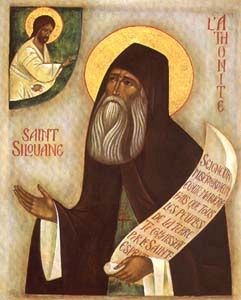
The Lord loves us as His children, and His love is stronger than a mother’s love, because even a mother can forget her child, but the Lord never forgets us. And if the Lord Himself had not given the Holy Spirit to the Orthodox people and our great pastors, then we could never know how much He loves us.
The Lord loves us so much that for our salvation He came down to earth and spilled His Blood for us, and gave It to us to drink, and gave us His Ever-Clean Body. Thus we became His children, of His Flesh and Blood; and we are like the Lord in flesh as children are like their fathers, no matter their age. And the Spirit of God witnesses to our souls that we shall always be with Him.
In order to experience the Lord it is not necessary to have wealth, or learning, but it is necessary to be obedient and abstemious, to have a humble spirit and love your neighbor; the Lord will love such a soul and reveal Himself to it, and will more often teach it love and humility, and will give it all it needs in order that it may find peace in God.
The Lord created man from earth, but He loves us as His children, and awaits us with joy.
The Lord loves all people, but whoever searches for Him, He loves most. “Who loves Me — I love,” says the Lord, “and who seeks me shall find grace” (Proverbs 8:17). The love of the Lord is such that He desires that all people should be saved and be with Him in Heaven for eternity, to witness His glory. We cannot know this glory in full, but through the Holy Spirit can know it in part. And whoever has not experienced the Holy Spirit cannot know this glory, but can only believe in the promise of the Lord and keep His commandments. But even they are blessed, as the Lord said to the Apostle Thomas (John 20:29); and they will be equal to those who witnessed the glory of the Lord on earth.
And I learned that love is different in strength. Whoever fears God in order not to insult Him: this is the first kind of love. Whoever has a mind clear of unnecessary thought — this is the second form of love, greater than the first. Whoever feels the presence of grace in his soul — this is the third form of love, even greater.
The fourth, absolute, love for God is to have grace in your body as well as your soul. Such a body will become holy and leave relics. This happens with great martyrs, prophets and saints. Whoever has reached this level is untouched by bodily love. He may sleep with a girl and feel no desire for her. The love of God is greater than that bodily love that attracts the entire world, except those who have the grace of God in full, for the sweetness of the Holy Spirit recreates the entire person and teaches to love God completely. In the fullness of the love of God, the soul does not touch the earth; though one may live among others in the world, he forgets all in the world thanks to the love of God. Our misfortune is that we are too proud to stand in that grace, and it leaves our souls, and the soul searches for it, crying and weeping, and says, “My soul pines for the Lord.”
Whoever wishes to love the Lord must love his enemies and be without spite; then the Lord will give you to glorify Him day and night, and your mind will forget the world; and if it should return and remember, then it will pray diligently for the world.
This is how the saints lived, for the Spirit of God taught their souls to pray for others.
The Lord calls upon bishops to lead their flocks and bestows upon them the grace of the Holy Spirit. In the Holy Spirit they have the authority to release sin or not. They are the heirs of the Apostles, and they lead us to Christ by the grace bestowed upon them. They teach us repentance; they teach us to keep the commandments of the Lord. They enlighten us with the word of God, so that we might experience the Lord. They show us the path of salvation and help us rise to the peak of the humble spirit of Christ. They collect the sorrowing and the lost sheep of Christ in the churchyard in order that their souls might achieve peace in God.
They pray to God on our behalf, so that we might be saved. They, as the friends of Christ, can entreat the Lord, so that the living will be given humility and the grace of the Holy Spirit, and the dead — forgiveness for their sins, and the Church — peace and freedom. They engage in great labors and deeds, and for this they receive the wealth of knowledge of the Saints, whose lives they emulate. They stand above all; like eagles, they soar high and from there they see boundless space, and with the wisdom of theology they lead the herd of Christ.
The priest, servant at the altar of Christ, is a great figure. Whoever insults him insults the Holy Spirit abiding in him. One humble and meek man was strolling with his wife and three children. He met an archpriest in a carriage, and when the peasant bowed to him in reverentially, he saw the archpriest blessing him enveloped in flames of grace.
If people could see the true glory in which a priest serves, they would faint from the sight; and if a priest could himself see the heavenly glory he stands in while conducting the service, he would become a great ascetic, in order not to allow any insult to the grace of the Holy Spirit residing within him.
I write these lines and my soul is joyous that our pastors are like the Lord Jesus Christ; but even we sheep, despite our small grace, are also like the Lord. People do not know this mystery, but John the Theologian clearly said, “Let us be like Him,” and not only in death, but even now, for the Merciful Lord has sent the Holy Spirit to earth, and the Holy Spirit lives in our Church. He lives in pure pastors; He lives in the hearts of believers; He teaches the soul spiritual feats. He gives strength to fulfil the Lord’s commandments and puts us on the path to righteousness.
Know two thoughts and fear them. One says: you are a saint; the other: you will not be saved. Both these thoughts are from the enemy, and there is no truth in them. You must think: I am a great sinner, but the Lord is merciful, He loves His children greatly, and will forgive my sins. But don’t depend on your deeds, though you may have worked much. One ascetic said to me, “I must surely be forgiven, for I bow so many times per day,” but when death came, he tore at his shirt. So, not for our labors, but in His grace the Lord dispenses mercy. The Lord wishes our souls to be humble, absent of hate and willing to forgive all, then the Lord shall forgive us with joy.
Know that if your thought leads you to look at how others live, this is a sign of pride. Watch after yourself and you will see that as soon as your soul rises above your brother, this is followed by evil thoughts.
Our enemies (demons) fell because of their pride, and call us to follow them, and bring us feelings of praise. And if your soul accepts that praise, then grace will depart, until the soul becomes humble again. And so all your life you must learn the humility of Christ.
A person can fall into vainglory either through inexperience or pride. If it is inexperience, the Lord will quickly heal him, but if it is pride, the soul will suffer long before it learns to be humble.
We fall into vainglory when we think we are smarter and more experienced than others, even our confessor.
If you see a light within you, or about you, do not believe it, if together with the light you do not feel tender emotion to God and love for your neighbor. But do not be afraid, and be humble, and the light will disappear.
If you see a vision, or an image, or a dream, do not believe it, for if it is from the Lord, the Lord will teach you. The soul that has not experienced the Holy Spirit cannot comprehend visions nor where they are from. The enemy gives the soul a sweetness mixed with vanity, and this is how to recognize vainglory. If a vision is from the enemy the soul will feel confusion and fear; but this is only a humble soul that feels itself unworthy of a vision; a vain person may not feel fear or even confusion, because he seeks visions and feels himself worthy, and as a result the enemy easily fools him.
The heavenly is experienced through the Holy Spirit, and the earthly through the mind: whoever wants to experience God with his mind through learning is in vainglory, for God can only be experienced through the Holy Spirit.
Why did the Holy Fathers place obedience above fasting and prayer? Because asceticism without obedience leads to vanity; if a novice merely does what he is told, he has no reason to be proud. Moreover, the obedient has cut off his will in everything and listens to his spiritual father, and for this reason his mind is clear of any concern and his prayer is pure. The obedient has in mind only God and the word of his elder, while the disobedient’s mind is full of various business and condemnation for his elder, and for that reason he cannot see God.
Obedience is necessary not only for monks, but for all people. Even the Lord was obedient. Proud and self-assured do not let grace reside within them, and therefore they never have internal peace, whereas the soul of the obedient easily accepts the grace of the Holy Spirit, bringing with it joy and serenity.
Whoever carries in him even a small amount of grace will submit to leadership with great joy. He knows that the Lord controls heaven and earth and the netherworld, and his own self, and his affairs and all that exists in the world, and for this reason he is always at peace.
Obedience prevents pride. In return for obedience you receive the ability to pray, along with the grace of the Holy Spirit. This is why obedience is greater than fasting and prayer.
If the fallen angels had retained obedience, they would have stayed in the heavens and would glorify the name of the Lord to this day. And if Adam had retained obedience, then he and his issue would have remained in Eden. But even now it is possible to return to Eden through repentance. The Lord loves us greatly, despite our sins, as long as we seek humility and love our enemies. Whoever does not love his enemies cannot achieve peace, even if he were placed in Eden.
Yearning for God
My soul yearns after the Lord and I seek Him in tears. How could I do other than seek
You, for You first did seek and find me, and gave me to delight in Your Holy Spirit,
and my soul fell to loving You.
I am a sinful man yet I have witnessed the Lord’s great love and mercy toward me.
Your meek and gentle gaze captured my soul.
O Lord, how greatly You love man!
O Lord, by the Holy Spirit, enlighten Your people that all may know You.
How happy are we Christians! What a God is ours!
On Prayer
He who loves the Lord is ever mindful of Him, and the thought of God bring prayer.
O man, learn the humility of Christ and the Lord will give you a taste of the sweetness of
prayer.
We are given churches to pray in, and in church the holy offices are performed according
to books. But we cannot take a church away with us, and books are not always at hand,
but interior prayer is possible always and everywhere. The Divine Office is celebrated in
church, and the Spirit of God dwells there in, but the soul is the finest of God’s churches,
and the man who prays in his heart has the whole world for a church. However, this is
not for everyone. Unceasing prayer is born of love.
On Humility
Humility is the light in which we may behold the light which is God — in the words of the
psalmist: ‘In your light we shall see light.’
Oh all saints, pray for me that my soul may learn the humility of Christ! My soul is
eager for it but I cannot learn this humility; I seek it in tears, like a lost child looking for
his mother.
O Lord, give us the gift of Your holy humility.
The Lord loves us greatly, yet we fall because we lack humility.
One man may suffer much from poverty and sickness but does not humble himself and so
his suffering profits him nothing.
The proud man fears obloquy, while the humble man cares nothing.
On Peace
Just as Father John of Kronstadt preserved his peace of soul by praying for the people
without ceasing, so we lose our peace because we do not love the people of God.
But if we accustom ourselves to praying eagerly for our enemies, and loving them, peace
will always stay in our souls.
If you renounce your own will, then you have conquered the enemy and your reward will
be peace of the soul.
On Grace
Until the coming of grace man lives his life and thinks that all is well and prosperous with
his soul; but when grace visits him and dwells with him he sees himself quite otherwise,
and it is only when he loses grace again that he realizes his unhappy state.
O Lord, You see how weak is my soul without Your grace, and nowhere is it at rest. Give us, Heavenly Father, the strength to love You. Give us Your holy fear in which the Cherubim tremble and love You.
Without grace man is but a sinful clay, but with the grace of God the spirit of man is like
an angel.
Glory be to the Lord that He gives us to discern the advent of grace, and teaches us to
know wherefore grace comes, and wherefore is lost.
Be obedient and sober… think that all men are good and beloved of the Lord. For such
humility the grace of the Holy Spirit will dwell in you, and cause you to exclaim, ‘How
merciful is the Lord.’
On the Will of God and on Freedom
It is a great good to give oneself over to the Divine will. Then the Lord alone occupies
the soul. No thought can enter in, and the soul undistracted, prays to God, and is full of
love for God even though the body is suffering.
Life is much easier for the man who is given over to the will of God, since in illness, in
poverty and persecution, he reflects this way: ‘Such is God’s pleasure, and I must endure on
account of my sins.’
The most precious thing in the world is to know God and understand His will, even if
only dimly.
Here is a sign: if you are distressed over anything, it means that you have not fully
surrendered to God’s will.
On Repentance
Glory be to the Lord that He gave us repentance. Through repentance we shall all, every
one of us, be saved.
But if every soul knew the Lord, and how deeply He loves us, no one would despair or
murmur against his lot.
To the man who repents, the Lord grants paradise and the Kingdom eternal with himself.
The truly repentant man readily bears every affliction – hunger and nakedness, cold and
heat, sickness and poverty, humiliation and exile, injustice and slander; for his soul is
turned with longing towards God, and he has no care for earthly things but prays to God
with a pure mind.
The Lord is quick to forgive the sins of the merciful.
On the Knowledge of God
The Lord loves man and reveals Himself to man, as it pleases Him. And when the soul
beholds the Lord’s, she humbly rejoices in the Master’s compassion. From that hour, her
love for her Creator is greater than any other love–though she may see all things and love
all men, yet she will love the Lord above all.
We may study as much as we will but we shall still not come to know the Lord unless we
live according to His commandments, for the Lord is not made known through learning
but by the Holy Spirit.
Though a man be eager to investigate everything he sees on earth and in heaven, if he is
not given to prayer and does not know the Lord, or seek to know Him, then when he
hears other men teaching of God he says:
‘Now, how is it possible to know God? And how is it that you know Him?’
I would reply: ‘The Holy Spirit is witness. The Holy Spirit knows, and He instructs us.’
On Love
The soul cannot know peace unless she prays for her enemies. The soul that has learned
of God’s grace to pray, feels love and compassion for every created thing. And in
particular for mankind, for whom the Lord suffered on the Cross and His soul was heavy
for every one of us.
O gracious Lord, how great is Your love for me, a sinner!
You gave me to know You.
You gave me to taste Your grace.
‘Taste and see that the Lord is good,’ You let me taste of You goodness and
mercy, and insatiably, my soul reaches towards You day and night. The soul cannot forget
his beloved Creator, for the Spirit of God gives her strength to love the Beloved.
Love is made known by the Holy Spirit. Through the Holy Spirit the souls know peace
and loveliness.
What shall I render unto Thee, O Lord, for that You hast poured such great mercy on my
soul? Grant, I beg You that I may see my iniquities, and ever weep before You, for
You art filled with love for humble souls, and dost give them the grace of the Holy
Spirit.
We are Children of God and in the Likeness of the Lord
Behold a wonderful thing! Grace gave me to know that all men who love God and keep
His commandments are fulfilled with light and are in the likeness of the Lord; whereas
those who go against God are full of darkness and in the likeness of the enemy.
Thus sin disfigures a man while grace beautifies him.
On the Mother of God
We cannot understand to the full the love of the Mother of God, and so we cannot thoroughly
comprehend her grief. Her love was complete. She had an illimitable love for God and
for her Son but she loved the people too, with a great love.
Many are the marvels and mercies that I have witnessed at the hands of the Lord and of
the Mother of God but there is naught I can render in return for this love of theirs.
My soul trembles and is afraid when I consider the glory of the Mother of God.
On the Saints
God is glorified in the Saints, while the Saints are glorified by the Lord.
To many people the saints seem far removed from us. But the saints are far only from
people who have distanced themselves – they are very close to them that keep Christ’s
commandments and possess the grace of the Holy Spirit.
The Saints hear our prayers and possessed God’s strength to help us. The whole Christian
race knows that.
Concerning Shepherds of Souls (priests)
The Lord calls His bishops to feed His flock, and gives them freely of the grace of the
Holy Spirit. It is said that the Holy Spirit established the bishops of the Church, and in the
Holy Spirit they have the power to bind and to remit sins. And we are the sheep of the
Lord’s flock that He loved unto the end and to whom He gave our holy pastors.
Brothers, let us dwell in obedience to our pastors, and then there will be peace in the
world, and the Lord through the Holy Spirit will abide in us.
We must always bear in mind that a father-confessor performs the duties of his office in
the Holy Spirit, wherefore we must venerate him.
If a man does not open his heart to his confessor, his live will be a crooked path that leads not
to salvation; whereas he who keeps nothing back will go straightway to the Kingdom of
Heaven.
A confessor should rejoice when the Lord brings him a soul for repentance, and
according to the grace given to him, he should heal the soul, wherefore he will receive
great mercy from God, as a good shepherd of his sheep.
Concerning Monks
A monk is someone who prays for the whole world, who weeps for the whole world; and
in this lays his main work.
Thanks to monks, prayer continues unceasing on earth, and the whole world profits, for
through prayer the world continues to exist; but when prayer fails, the world will perish.
Thus has the Holy Spirit schooled the monk to love God and to love the world.
Myself, I am not worthy to be called a monk. I have spent over forty years in the
monastery and count myself among those at the start of their novitiate. But I know monks
who live close to God and to the Mother of God.
Concerning Obedience
The spirit of obedience is necessary not only for monks but for everyone else, too. Even
the Lord was obedient.
He who will bear within him even a small measure of grace will submit himself joyously
to all authority.
The obedient man has given himself over to the will of God and has no fear of death, for
his soul is accustomed to live with God, and loves God.
Concerning Spiritual Welfare
Every one who follows our Lord Jesus Christ is engaged in spiritual warfare. The saints
by long experience learned from the grace of the Holy Spirit how to wage this war.
Blessed are we Orthodox Christians because we live under the protection of God’s
mercy. It is not difficult for us to wage this war: The Lord had pity on us and gave us the
Holy Spirit, Who abides in our Church. We suffer because we lack humility.
While we are on earth, we must learn how to wage war with the enemy. The hardest thing
of all is to subdue the flesh for God’s sake, and overcome self-love.
Concerning Intrusive Thoughts and Delusions
Beware these two thoughts, and fear them. The first suggests ‘You are a saint;’ the other,
‘You will not be saved.’ Both come from the enemy, and there is no truth in them.
Instead, think to yourself, ‘I am a great sinner but the Lord is merciful. He loves man
with a great love, and will forgive my sins.’
Evil thoughts afflict the proud soul, and until he humbles herself he will know no rest from
them. The Lord gives the soul understanding to recognize His coming, to love Him and
do His will. Fight the enemy with the weapon of humility.
Adam’s Lament
My soul wearies for the Lord, and I seek Him with tears.
How should I not seek Him?
‘When I was with Him my soul was glad and at rest, and the enemy could not come nigh
me.
‘But now the spirit of evil has gained power over me, harassing and oppressing my soul,
‘so that I weary for the Lord even unto death,
‘And my spirit strains to God, and there is nought on earth can make me glad,
‘Nor can my soul take comfort in any thing,
‘But longs once more to see the Lord, that her hunger may be appeased.
Reminiscences and Conversations
Glory to Thy compassionate O Lord!
Thou dost give the soul to know Your love for the creation, and the soul knows her Master
and Creator.
The soul is content in the Master. He gives her rest, and the earth is forgotten in God-he
who abides in God is not mindful of the earth.
When I lose grace, my soul is exceedingly sad and I exclaim: ‘Why did I transgress and
so lose the Lord?
It is very difficult to live without a staretz. The inexperienced soul does not apprehend
God’s will, and endures many afflictions before she learns humility.
About St. John of Kronstadt
O noble Father John who intercedes for us,
I give thanks to God that I saw you.
I give thanks to thee, too, good and holy shepherd, that because of thy prayers,
I left the world and came to the Holy Mount Athos,
Where I have witnessed great mercy at God’s hands.
About Father Stratonicos
O, our dear Father Straticonos, prodigious lover of weeping, where are thou now?
Come to us, and we will build thee a cell on the high mountain, and contemplate thy holy
way of life,
And according to the measure of our strength imitate thy mighty strivings!
The time of your tears, O Father, is over.
Now you listen in heaven to the songs of the Cherubim.
Now behold the glory of the Lord, whom your soul so loved on earth, where aspiring to
Him she gave herself over to tears of repentance.
Thoughts, Advice and Observations on Ascetism
I write, and it is easy for me to write, since my soul knows the Lord.
In order to hold the mysteries of God, we must earnestly entreat the Lord for a humble
spirit, and then we shall know his mysteries through the Holy Spirit.
‘O Lord, You are merciful, You created us, and You feed and clothe all men.
You see, O Lord, how my father mourns because there is no rain. Do send rain
on the earth.
O Lord, give us to love the whole universe!
O Holy Spirit, live in our souls, that with one accord we may all glorify the Creator,
Father, Son and Holy Spirit. Amen.
If we view the entire two-thousand-year history of Christianity, we can see the endless wealth of achievements of Christian culture. Enormous libraries, filled with the great works of human minds and spirits. A great number of academies, universities, institutes, where hundreds of thousands of young people approach the banks of this great ocean, sometimes with baited breath and pounding hearts, thankful for the fortune and joy given to them, in other cases with a burning enthusiasm, so that they feel no need to sleep or care for themselves, and drink greedily of the living waters of wisdom. Tens of thousands of beautiful temples, magnificent creations of human genius. Uncounted precious creations of other forms of art: music, art, sculpture, poetry. And much else besides. And the Elder ignores this and sees only one thing: humility and love of one’s enemies — this is all there is.
As wise and learned and fine-looking as a person may be, if he does not love his enemies, i.e. any other person, he cannot reach God. And the opposite is also true, however simple a person may be, and poor and ignorant, but if he carries within himself that love, then “he is with God and God is with him.” The Elder maintained that it was impossible to love one’s enemies outside of the One True God. The carrier of such love is a participant in eternal life, and he carries within himself an undeniable witness of this. He is the abode of the Holy Spirit, and knows the Father and the Son through the Holy Spirit, knows them with a true and life-giving knowledge, and in the Holy Spirit he is a brother and friend of Jesus Christ, he is the son of God, and close to God in grace.
The Lord condensed all the law and prophets into two brief commandments (Matthew 22:40). And during the last supper, before His path to death on the cross, said to the Apostles, “There is no greater love but that a man lay down his life for his friends,” adding, “You are My friends… I call you friends because I have told you all that I have heard from My Father” (John 15:13-15). Thus in these few words was said everything. And without them all the laws, prophets, cultures, are nothing.
In order to remain in the love of God, it is necessary that anger and “hate” be multiplied to their limits, but they must be directed at the sin that lives inside me, at the evil that acts within me, within me, not within my brother.
All the energy of the struggle with cosmic evil is contained in the deep heart of the Christian, even as externally he — as Christ commanded — “must not resist evil” (Matthew 5:39).
Elder Siluan walked the earth, labored with his hands, and lived among people as a simple human, but nobody except God ever knew him.
In Romanian, from St-Siluan
Nimeni nu poate cunoaște de la sine ce este iubirea lui Dumnezeu, dacă nu-L învață Duhul Sfânt; dar în Biserica noastră iubirea lui Dumnezeu se face cunoscută prin Duhul Sfânt și de aceea vorbim despre ea.
Sufletul păcătos care nu cunoaște pe Domnul se teme de moarte, gândind că Domnul nu-i va ierta păcatele sale. Dar aceasta e pentru că sufletul nu cunoaște pe Domnul și cât de mult ne iubește. Dacă oamenii ar ști aceasta, nici un singur om nu ar mai deznădăjdui, pentru că Domnul nu numai că iartă, dar se și bucură de întoarcerea păcătosului. Chiar și atunci când moartea îți bate la ușă, crede cu tărie că, de îndată ce vei cere iertare, o vei și dobândi.
Domnul nu e ca noi. El este blând și milostiv și bun, și atunci când sufletul Îl cunoaște, el se minunează fără sfârșit și zice: “Ah, ce Dumnezeu avem!”.
Domnul ne iubește și ne primește cu blândețe, fără reproșuri, așa cum în Evanghelie tatăl fiului risipitor nu i-a făcut acestuia reproșuri, ci a dat poruncă slujitorilor să-i dea o haină nouă, să- i pună pe deget un inel scump și încălțăminte în picioare, să junghie vițelul cel gras și să se veselească și nu l-a învinuit (Lc 15).
Cu câtă blândețe și răbdare trebuie să îndreptăm și noi pe fratele nostru, ca să fie praznic în suflet pentru întoarcerea lui!
Duhul Sfânt învață sufletul în chip negrăit să iubească pe oameni!
Dacă vrei să cunoști pe Domnul, smerește-te până la sfârșit, fii ascultător și înfrânat în toate, iubește adevărul și negreșit Domnul îți va da să-L cunoști prin Duhul Sfânt; și atunci vei ști din experiență ce este iubirea lui Dumnezeu și ce este iubirea de oameni. Și cu cât mai desăvârșită este iubirea, cu atât mai desăvârșită este și cunoașterea.
Cine se teme de păcat acela iubește pe Dumnezeu; cine are străpungerea inimii acela iubește mai mult; cine are în suflet lumină și bucurie, acela iubește încă și mai mult; dar cine are harul în suflet și ăn trup, acel are iubirea desăvârșită. Un astfel de har a dat Duhul Sfânt mucenicilor, și el îi ajuta să îndure cu bărbăție toate suferințele.
** sfarsit **
Un sit cu cateva texte crestine (in roumanian) hystria.tripod.com
hystria.tripod.com/alte_texte/teoclit.html
Another monk from Romania https://www.youtube.com/watch?v=7AvbIjg1f-I
A romanian noun woman who died in 2014 and was sanctified in 2026 https://youtu.be/432Aqvci-sw
This other film is with father Thaddeus (Tadej) of Vitovnica. He died in 2003 and is considered a Saint. I will put some texts from him at the bottom of this page, he appears to think in a way similar to St. Silouan https://www.youtube.com/watch?v=Vj3ULugb5A4
The following picture is of french speaking Father Seraphim from the Valaam Monastery (Russia). He is a disciple of Elder Sophrony which was disciple of Saint Silouane. Father Seraphim appears in this documentary at minute 48:35 (use the CC button to translate in english) https://www.youtube.com/watch?v=ga2Nfogs9iI

From Saint Thaddeus (there are many translation errors in these lines)
1. Spiritual life is noetic life, which is higher than all the desires and feelings of this world.
2. The main thing in spiritual life is to keep your heart at peace.
3. The Lord looks into the depth of the heart, its desires and aspirations.
4. We must remove earthly plans and desires from the heart, only then together with the Lord can we sincerely love our neighbor
5. Communion with God is the normal spiritual state.
6. The first step to communion with God is to give ourselves up to God completely.
7. With God’s help we can do everything, everything, when we turn to the Lord with our hearts.
8. A soul which has given itself up to God’s will does not fear anything and is not troubled by anything. About everything that happens, it says: it is God’s will.
9. Peace and joy are the greatest riches in this world and in the world to come.
10. Love is the strongest weapon that exists; there is no power or weapon which can fight love: it overcomes them all.
11. Love, joy and peace are Divine gifts, Divine characteristics. In themselves love, peace and joy work miracles, but joined together they can fulfil all the commandments.
12. The mind, the will and the heart are at one among the enlightened, but among the unenlightened they are most often divided and many human misfortunes result from this.
13. The pure heart will see God but the impure will feel shame to eternity.
14. The Lord looks into our hearts and when we turn to Him from the heart, He immediately consoles us.
15. As well as keeping peace in your heart, practice standing before the Lord. This means constantly keeping in mind the fact that the Lord is looking at us.
16. There is no such thing as an unforgivable sin except for an unrepented sin.
17. The sign that a sin has been forgiven is if the sin is repeated and there is still peace in the soul.
18. The thoughts that we give ourselves up to define our life.
19. We must learn to control our thoughts so that we can order them.
20. We must give ourselves up to good thoughts and desires for our benefit and then we, our families and others will experience harmony, for, wherever we may be, we will give out quiet and peaceful thoughts, which are full of good.
21. Even the slightest thought that is not founded on love destroys peace.
22. He who accepts an evil suggestion accepts the enemy into his body. The spirits are invisible, we give them bodies so they become visible.
23. Our thoughts not only cause wars and earthquakes, but also the pollution of the environment. This is surpassed by spiritual pollution, which is much more dangerous.
24. Work hard to have good thoughts and goodwill towards friends and enemies and you will see what good fruit you and everyone around you will receive.
25. Cease to think evil of your superiors or colleagues at work, change your evil thoughts to good ones and you will see how the behavior of your one time ‘enemies’ will change.
26. When you get up in the morning, do not leave the house without praying and in the evening thank God for the wonderful day.
27. Just as even a tiny speck of dust which has got into your eye can stop you seeing, so also a small care about some irrelevant matter can stop you praying.
28. If we pray inattentively, then we are not praying in spirit and in truth.
29. Everyone must use the Jesus Prayer. ‘Lord Jesus Christ, Son of God, have mercy on me a sinner’.
30. To pray is to draw energy from the Source of life.
31. Attention is required for prayer. It must precede prayer so that we know what we are seeking, what we are praying for.
32. Humility is the perfection of Christian life.
33. Humility is a Divine characteristic. Where there is humility, whether in the family or in society, it always spreads Divine peace and joy.
34. He who sets an example to others through his way of life is humble. Example is the best proof of the truth.
35. He who is humble is utterly content with what God has given him and he is happy at heart. Such people feel sorry for those who do not want or do not know how to amend their lives.
36. The humble do not get angry, they do not wish others ill and do not do evil, even to those who cause them evil.
37. The humble look on everyone as higher than themselves.
38. Chastity is attained through fasting, prayer and especially obedience.
39. Fasting is required to humble the body, for when the body is humble, the soul is humble.
40. Those who are humble and meek in soul are pleasing to God. They do not get angry when they are insulted, they are full of goodness and peace.
41. Here on earth we frequently experience many misfortunes and hardships, but all of these are because we have not humbled ourselves.
42. If someone is very demanding, then he is tormented by this.
43. He who thinks that he knows everything is disobedient and no-one can guide the disobedient.
44. The disobedient do not rejoice in the Kingdom of God, because they always want to do their own will, not God’s will.
45. When we are completely humble, then everything around us is humble.
46. Only the meek and humble enter the Kingdom of Heaven.
47. We cannot be saved without struggling against the devil. We must endure many sorrows in our heart before the soul can free itself.
48. Anger is vanquished by renouncing our desires and our own will.
49. If we can stop making ourselves into judges over others and thinking that we are worthy, then there will be no anger.
50.If someone says or does something that is not to our liking and, failing to examine whether he is right or not, we feel offended, then we are in the grip of pride.
51. Jealousy destroys our inner peace and the quiet of soul.
52. Sometimes the Lord reveals to us in our thoughts the answers to various questions and mysteries, but sometimes He is silent, so that we might turn to others for advice and so become humble.
53. We can find something edifying in everybody’s life. Even the worst thief has something good in him.
54. Life here on earth is unceasing physical and spiritual warfare.
55. Man is only a tool in the hands of the Lord.
56. It is better to sing than to read. Sing. People say that he who sings does not think ill.
57. Divine life cannot bear selfishness.
58. As long as we pay attention to the negative sides of various people we meet, we will not find peace and repentance. As long as we keep in ourselves the thought of offence, caused to us by enemies, friends, family and neighbours, we will not find peace and quiet and we will live in a hellish state.
59. When you find a soul akin to your own, stay with it, for it is a great joy to make friends with those who think alike.
60. Today all civilization is directed towards distracting the attention of people, especially of the young, from themselves, from the self, from looking inside, into the heart.
61. Unbelievers are busied with philosophy, reflection and achievements, but all of this is short term consolation and melancholy and solitude soon attack once more.
62. Evil is the abuse of good on the part of rational beings who have fallen into base philosophizing and create chaos in themselves and around them with their thoughts and desires.
63. The world is ever more sunk into sin and evil and confuses love and passion, yet love and passion have nothing in common. Love is God and passion is what comes from evil spirits.
64. We scorn our politicians who are in power, yet they are our children. We were the ones who were wrong before them, for we set them living examples which they could only equal.
65. There are no atheists! They do not exist. Even the enemy believes and trembles, only he does not do good.
66. 50 years of Communism have caused us far more evil than 500 years of the Turkish yoke. Communism removed people from God.
67. We suffer because our thoughts and desires are evil. We are ourselves the cause of our sufferings, for there is no repentance among our people. There is repentance neither among believers, nor among unbelievers.
68. Magic is performed where there is no prayer or strong hope in God.
69. Only love and goodness save both people and the whole world. Nothing is ever obtained through violence. Force merely provokes rejection and hatred.
70. All the knowledge which has been revealed to men through science is a gift of God to people and proclaims the presence of God in this world.
71. There is no knowledge revealed by human science which has been given by God to our detriment, everything has been given exclusively for our benefit.
72. Grace is Divine strength which is active everywhere, but especially in the souls of those who seek the source of life, who seek God.
73. We cannot keep inner peace if our conscience reproaches us for something. First of all we must make peace with our conscience.
74. It is better if we condemn ourselves than if the Lord condemns us. If we condemn ourselves, then He knows that we have repented and no longer wish to sin.
75. Repentance means changing our lives, abandoning the old man with all his evil habits and turning to God and the truth, so that we can be peaceful, still, good and meek.
76. If your parents are atheists and you are a believer, do not reproach or taunt them with your faith but pray for them and be good to them.
77. We must learn to divest ourselves of our burdens so that we can turn to God immediately and confide our cares and our neighbors’ cares in Him.
78. We must help people to know their faith.
79. We must not preach from our heads but from our hearts. Only what is said from the heart can reach another heart.
80. It is much better to learn from life than from words.
81. It is dangerous to be strict with others.
82. Those who are strict with others can only reach a certain level in spiritual life. They remain at the stage of physical asceticism.
83. As is our relationship to our neighbor, so is our relationship to God.
84. Our neighbor is he who seeks our help.
85. We must have the same relationship with everyone. We must not separate people into those we like and those we dislike.
86. As long as we pay attention to the negative sides of those we meet, we will not find peace or quiet.
87. Everything done for the sake of God and not for the sake of glory is good.
88. He who works badly cannot expect good pay.
89. Only he who is with God and is informed about his salvation is rich.
90. The fear of God is not the instinctive animal fear of this world. That is a hellish quality. We live in a constant state of fear: what will happen tomorrow, in the future? The fear of God is similar to that when you love someone from your heart and you are careful not to offend him or annoy him with your whole being, not only through your thoughts and actions, but through your thoughts too.
91. There is not a single being who is perfect. We can only be perfect with God; without Him it is impossible.
92. Care for the soul is more precious than the gifts of this world.
93. A family which is pleasing to God must be filled with love, nobility, meekness, humility, piety and prayerfulness.
94. If a parent hits a child in anger, nothing will be achieved by it.
95. If there is a family where nearly everyone is content but one is not and begins to think that he has been treated unjustly and the others have behaved badly towards him, then everyone will start to be discontent, but they will not know why.
96. No-one who enters into a marriage without a blessing or who has been forced into marriage will find peace and their love will be useless to them.
97. When a child is born he cries because he does not know what sins await him. But when someone dies, he is happy because he enters into eternal life. Then everyone around him cries because they have to stay here.
98. There is no need to be sad for the dead, it is better to pray to the Lord, asking Him to grant them the dwelling places promised by the Gospel. Sadness destroys everything. It destroys the peace which they have received from the Lord.
99. To be sad for your departed relatives is not Christian. This is the lot of those who do not know God. We should rather pray to the Lord to forgive them their sins and do good deeds in their memory.
100. Here on earth there is nothing that can give us inner peace. For neither riches, nor glory, nor honor, nor position, nor family, nor neighbors can give us unshakeable inner peace. There is only one giver of life, peace and joy – God.

 Saint Silouan from Mount Athos photos & writings collection